
Top 6 Extraordinary Animals With Tusks (With Pictures)
The fascinating world of Animals with Tusks, from the majestic walrus to the wild boar. Understanding the role of tusks in these creatures’ lives reveals not only their adaptations.
The challenges they face in the wild. Join us as we delve into the significance of these extraordinary features and what they tell us about the animal kingdom.
List of Animals With Tusks
Below is a list of Animals with Tusks:
- Warthog
- Elephant
- Walrus
- Narwhal
- Babirusa
- Wild Boar
Warthog
- Scientific Name: Phacochoerus africanus
- Class: Mammalia
- Diet: Omnivore
The warthog, with its distinctive tusks and rugged appearance, is a fascinating example of adaptation in the African savanna that Animals with Tusks. Their unique ability to communicate through a series of grunts and squeals adds a layer of complexity to their interactions that many might overlook.

Found primarily in sub-Saharan Africa (African Animals) these remarkable creatures possess a surprisingly intricate social structure. Often seen in small family groups, warthogs are known for their playful antics, particularly when it comes to maintaining their social bonds.
Equipped with impressive digging skills, warthogs use their tusks not only for defense against predators but also for foraging. They create burrows in the ground, often taking shelter in abandoned aardvark holes, showcasing their resourcefulness.
Elephant
- Scientific Name: Elephantidae
- Class: Mammalia
- Diet: Herbivore
Elephants are often revered for their intelligence and emotional depth, but their social structures are equally fascinating. They form matriarchal societies, where the oldest female leads the herd, guiding younger members during migrations and foraging.

This leadership is not merely about survival.it encapsulates a rich tapestry of learned experiences that can be pivotal for the herd’s resilience.
As the warthog, a seemingly inconspicuous creature, plays a crucial role in the ecosystem by aerating the soil and encouraging new plant growth, elephants also serve as “ecosystem engineers.” They create watering holes that become vital resources for a multitude of species, showcasing the interconnectedness of life.
Walrus
- Scientific Name: Odobenus rosmarus
- Class: Mammalia
- Diet: Carnivore
The walrus, with its magnificent tusks and whiskered visage, embodies the rugged allure of the Arctic. These marine mammals, often seen lounging on ice floes in large herds, have a social structure that intrigues researchers.
Their tusks, which can grow up to three feet long, serve not just for combat and dominance displays, but also for aiding in hauling their substantial bodies out of the icy waters.

Watching a group interact reveals a fascinating ballet of communication; from vocalizations to subtle body movements, walruses exhibit a complex social hierarchy.
The walruses play a crucial role in their ecosystem, acting as a keystone species. Their feeding habits, primarily targeting benthic organisms like clams and mollusks, help maintain the balance of their underwater habitats.
Narwhal
- Scientific Name: Monodon monoceros
- Class: Mammalia
- Diet: Carnivore
The narwhal, often dubbed the “unicorn of the sea,” captivates not only with its striking features but also with its intriguing behaviors.

The long, spiraled tusk, an elongated tooth, serves various purposes beyond being an impressive display; it’s believed to play a role in social interactions among males, acting as a sensory tool that can detect changes in water temperature and salinity. This remarkable adaptation highlights how nature crafts extraordinary solutions to survival.
The narwhals are excellent indicators of climate change, closely tied to the Arctic’s shifting ecosystems. As the ice melts, their habitats are disrupted, forcing them to venture into new territories, which can have cascading effects on local marine life because these Animals with Tusks.
Babirusa
- Scientific Name: Babyrousa
- Class: Mammalia
- Diet: Omnivore
The babirusa, often referred to as the “deer pig,” is a fascinating creature native to the forests of Indonesia. Unlike many other pig species, babirusas are known to be surprisingly good climbers, a skill that helps them navigate their hilly, forested habitats and escape from predators.

With its striking appearance, sharp, upward-curving tusks that can pierce through its own skin if left unchecked, this unique species blurs the line between pig and antelope.
Their unusual physical traits,(Animals with Tusks) babirusas hold a significant place in their ecosystem, serving as seed dispersers that contribute to forest health. Their foraging habits help maintain biodiversity, but they are often overshadowed by more charismatic wildlife.
Wild Boar
- Scientific Name: Sus scrofa
- Class: Mammalia
- Diet: Omnivore
The wild boar, often misunderstood as merely a nuisance, plays an essential role in its ecosystem. As expert foragers, these creatures use their strong snouts to root through the forest floor, aerating the soil and promoting the growth of diverse plant species.
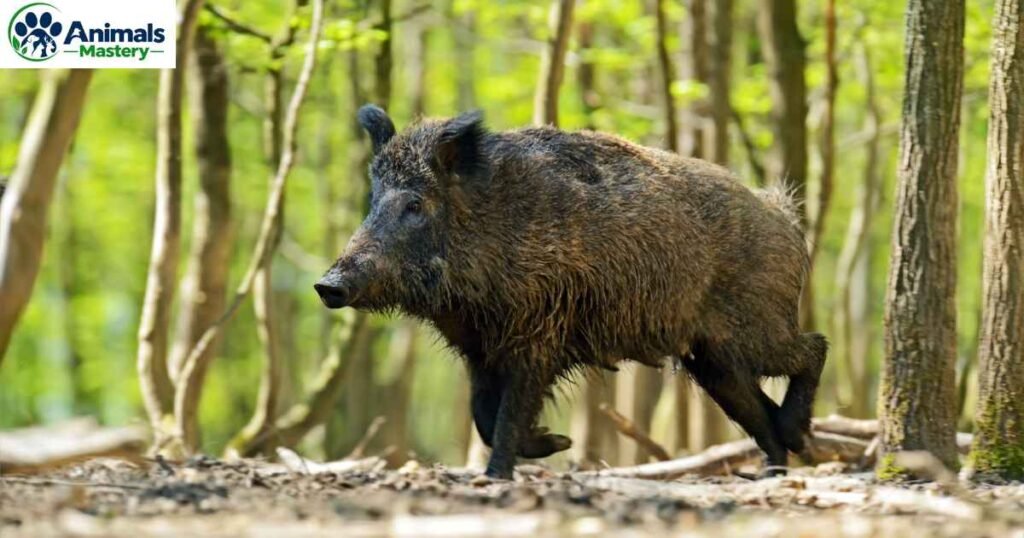
Their eating habits also help scatter seeds, facilitating regeneration in degraded landscapes and ensuring that various flora thrive. This ecological dynamism is particularly vital in maintaining the health of their habitats, from woodlands to wetlands.
Wild boars are also symbols of resilience and adaptability. With their remarkable ability to thrive in diverse environments from dense forests to rural farmlands they illustrate nature’s capacity for survival against changing conditions.
Top 18 Animals That Walk On Two Legs
Conclusion
Animals with tusks are remarkable creatures that showcase the diversity of adaptations in the animal kingdom. From the majestic elephants, which use their tusks for foraging and defense, to the powerful narwhals, whose long tusks serve as a unique adaptation in the wild, these animals embody the wonders of evolution.
Many tusked species face significant threats due to habitat loss and poaching for their ivory. It is crucial for us to advocate for conservation efforts and protect these incredible animals for future generations to appreciate. Let us all commit to awareness and action in preserving the natural world around us.
FAQs
What Other Animal has Tusks?
In addition to elephants, several other animals possess tusks. One notable example is the walrus, which has prominent tusks that can grow quite long.
Which Animal has 700000 Teeth?
The animal often cited as having an astounding number of teeth is the species known as the lanternfish. These small, deep-sea fish possess an incredible adaptation.
Do Hippos have Tusks?
Yes, hippos have tusks. Their large canine and incisor teeth grow continuously and are mainly used for fighting, defense, and displaying dominance. Hippo tusks can become very large, especially in males.
How many Different Animals have Tusks?
There are many different animals with tusks, including elephants, walruses, warthogs, wild boars, babirusas, and hippos.