
Top 14 Skilled Birds That Eat Fish (Facts & Pictures)
Some of the most stunning and agile birds in the world have a fish-based diet. In this article, we’ll dive into the fascinating realm of birds that eat fish, showcasing 14 incredible species that dominate the aquatic hunting scene.
Understanding these birds not only enriches our appreciation of nature but also highlights the delicate balance of our ecosystems.
Prepare to discover intriguing facts about these avian predators that might inspire you to look at your local waterways in a whole new light.
List of Birds That Eat Fish
Below is the list of Birds That Eat Fish:
- Osprey
- Great Blue Heron
- Cormorants
- Kingfishers
- Mergansers
- Penguin
- Bald Eagle
- Gannet
- Loons
- Atlantic Puffins
- Shoebill Stork
- Pelicans
- Albatross
- Common Tern
Osprey
- Scientific Name: Pandion haliaetus
- Family: Pandionidae
- Class: Aves
- Diet: Carnivore, eats fish almost exclusively
The Osprey, often referred to as the “Fish Hawk,” is a master of aquatic hunting, showcasing remarkable adaptations that make it one of nature’s most efficient fish predators. Unlike many raptors, the Osprey possesses reversible toes, allowing it to grasp slippery fish with an iron grip.
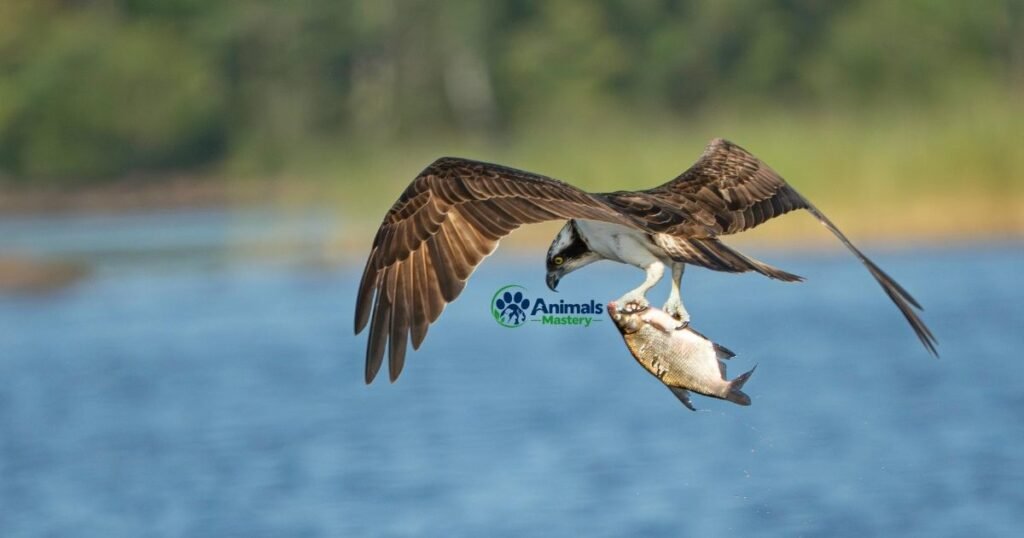
This unique physical trait is complemented by its acute eyesight, enabling the bird to spot potential prey from great heights.
When it dives headfirst into the water, the Osprey demonstrates both power and precision, emerging with a catch that can weigh up to twice its body weight, a feat of raw strength that puts it in the same conversation as some of the most muscular animals in the wild.
Beyond its stunning hunting techniques, the Osprey plays a crucial role in the aquatic ecosystem. By primarily feeding on fish, it helps maintain fish populations, ensuring a balance within freshwater and marine habitats.
Herons
- Scientific Name: Ardea herodias
- Family: Ardeidae
- Class: Aves
- Diet: Carnivore, eats fish, amphibians, and small reptiles
Herons, with their long legs and graceful posture, are a captivating sight in wetland habitats where they master the art of fishing. These elegant birds have evolved to thrive in aquatic ecosystems, relying on their keen eyesight and stealthy hunting techniques to snag fish from beneath the water’s surface.

Whether standing statue-like in shallow waters or wading through reeds, herons display an impressive adaptability, allowing them to coexist with various aquatic species while maintaining balance within their environment.
One of the most intriguing aspects of herons is their varied fishing strategies, which can differ significantly based on species and habitat. The Great Blue Heron employs a waiting tactic, standing motionless for long periods before swiftly striking with its sharp beak. In contrast, smaller species, like the Green Heron, may engage in clever baiting behaviors, using breadcrumbs or insects to lure fish closer.
This diversity in fishing methods not only highlights their individual adaptations but also emphasizes the complexity of their role within the aquatic ecosystem, showcasing the interconnectedness of species and the importance of preserving these delicate wetland habitats.
Cormorants
- Scientific Name: Phalacrocorax carbo
- Family: Phalacrocoracidae
- Class: Aves
- Diet: Carnivore, feeds on fish
Cormorants are fascinating avian specialists, expertly adapted to their aquatic hunting lifestyle. Known for their impressive deep-diving ability, these birds can plunge up to 20 feet underwater in search of fish, showcasing a remarkable adaptation that sets them apart from other seabirds.
Their streamlined bodies and webbed feet function like flippers, allowing them to maneuver swiftly through water, a sleek, agile build shared by several animals like weasels built for fast pursuit, while their keen eyesight enables them to spot prey from above the surface.
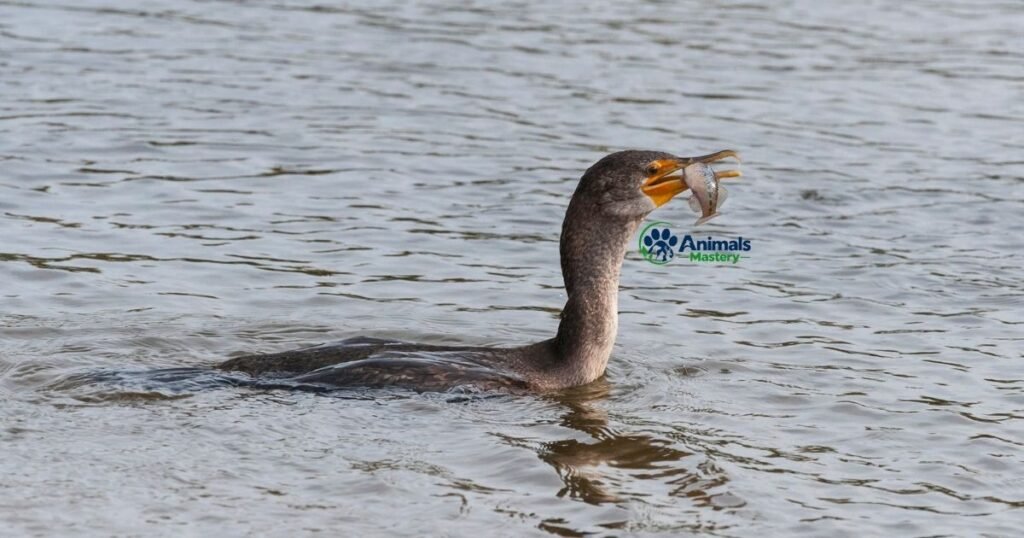
What makes cormorants particularly captivating is their social hunting behavior. Often found in sizable groups, cormorants employ a strategy known as group hunting, which enhances their effectiveness in catching fish. During these coordinated hunts, they work together to corral fish into tight schools, making them easier targets.
This collaborative approach not only reflects their intelligence but also highlights the intricate dynamics of their underwater ecosystem.
Their unique drying ritual is also a sight to behold; when they emerge from the water, cormorants spread their wings wide, a phenomenon that may seem like a sunbathing retreat but serves a practical purpose.
This behavior allows them to dry their feathers, ensuring they maintain buoyancy on their next dive. As we observe these remarkable birds, we gain insights into the delicate balance of aquatic life and the adaptability that sustains it.
Kingfishers
- Scientific Name: Alcedo atthis
- Family: Alcedinidae
- Class: Aves
- Diet: Carnivore, eats fish and aquatic insects
Kingfishers, often seen perched on branches near water bodies, possess exceptional eyesight that plays a crucial role in their hunting success. Their ability to spot prey from great distances is a fascinating adaptation that sets them apart in the avian world.
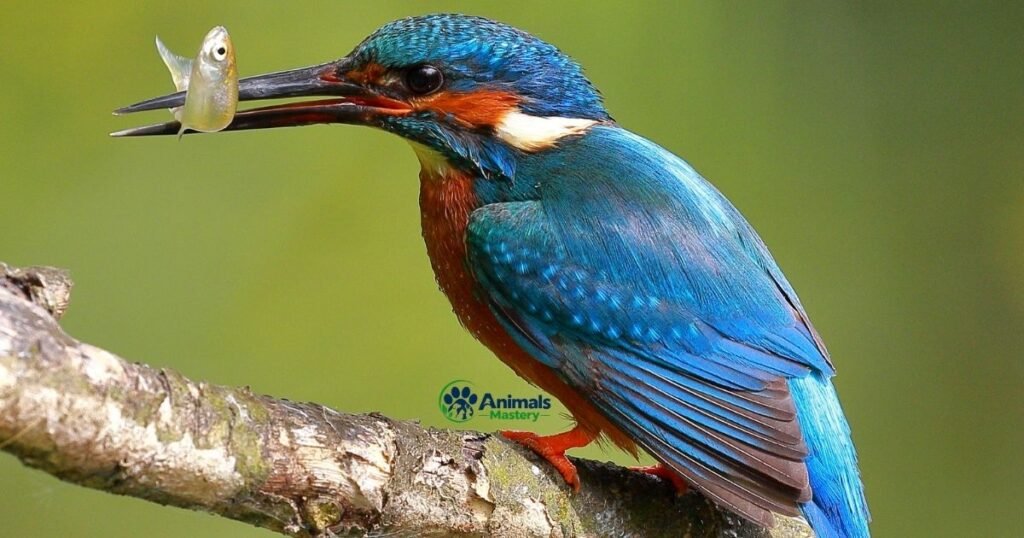
When a glimmering fish dances just beneath the surface, these vibrant birds quickly lock onto their target, their eyes capable of adjusting to the refraction of light as it hits the water.
The kingfisher’s diving technique is as impressive as its vision. These skilled hunters can plunge into the water with breathtaking precision, their streamlined bodies allowing for minimal splash upon entry.
The methodical nature of their hunting not only showcases their agility but also highlights their evolutionary adaptations to an aquatic lifestyle. Witnessing a kingfisher in action is more than just a visual delight; it is a reminder of the intricate balance between species and their environments, underscoring the mastery of life that thrives in our watery ecosystems.
Mergansers
- Scientific Name: Mergus merganser
- Family: Anatidae
- Class: Aves
- Diet: Carnivore, eats fish and aquatic invertebrates
Mergansers are truly remarkable when it comes to aquatic adaptation, showcasing an extraordinary method of fish hunting that sets them apart from other waterfowl. Their serrated bills are specifically evolved for gripping slippery prey, allowing these sleek ducks to dive with finesse and precision in pursuit of fish.
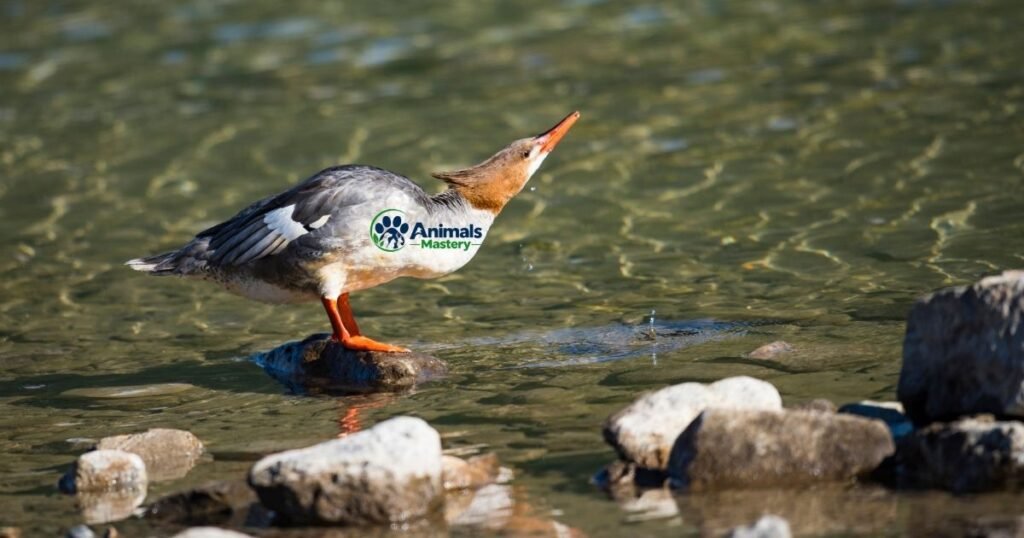
This unique feature not only aids in hunting but also highlights the intricacies of their evolutionary journey, where survival relies heavily on specialized traits.
Mergansers exhibit diverse hunting strategies depending on their environment and the availability of fish. While some species prefer to hunt alone, others employ a cooperative approach, using teamwork to corral fish into more manageable groups.
This social behavior not only enhances their foraging success but also underscores the dynamic interplay between these birds and their aquatic ecosystems. Observing a merganser in action is a mesmerizing reminder of nature’s ingenuity in adapting to its challenges.
Penguin
- Scientific Name: Aptenodytes forsteri
- Family: Spheniscidae
- Class: Aves
- Diet: Carnivore, eats fish, squid, and krill
Penguins, often celebrated for their charming waddles and tuxedo-like appearances, are also remarkable fish-eating birds with intriguing underwater hunting techniques. Their streamlined bodies and strong flippers allow them to dive gracefully, reaching depths of over 1,800 feet in search of their favorite meals, such as krill, squid, and small fish.

But what truly sets them apart is their unique method of bubble-net feeding, a strategy that showcases their adaptability to aquatic life. By rhythmically releasing air bubbles while swimming in coordinated groups, they can corral fish into tight formations, making it easier to catch them.
This extraordinary hunting behavior highlights not only their physical prowess but also their social intelligence. Penguins communicate through a series of vocalizations and body movements, ensuring that every member of the group plays a role in the chase.
By adapting their hunting strategies to the dynamics of their environment, these birds exemplify the remarkable evolutionary traits that have allowed them to thrive in harsh aquatic conditions.
Bald Eagles
- Scientific Name: Haliaeetus leucocephalus
- Family: Accipitridae
- Class: Aves
- Diet: Carnivore, eats fish, waterfowl, and carrion
With their keen eyesight, Bald Eagles are remarkable aerial hunters, often soaring high above lakes, rivers, and coastal waters in search of their next meal. Their fishing technique is nothing short of spectacular; when they spot a fish from the sky, they execute a thrilling plunge dive that showcases their impressive wingspan and sharp talons.

This hunting method is not just instinctual but also highly efficient, allowing them to snatch fish from the water with precision, using their keen eyesight to track movements even from great heights.
Opportunistic feeders, Bald Eagles adapt their diet to the available resources, sometimes scavenging from other birds or feasting on smaller animals. This adaptability enhances their survival, especially in changing environments where fish populations might fluctuate.
Watching a Bald Eagle dive for fish is a reminder of nature’s raw power and beauty, as these majestic birds not only symbolize strength but also resilience. Their role as apex predators in ecosystems underscores the delicate balance of food webs, making every successful fishing plunge a testament to their vital place within the avian world.
Gannet
- Scientific Name: Morus bassanus
- Family: Sulidae
- Class: Aves
- Diet: Carnivore, eats fish, caught by plunge-diving
The Gannet is a striking seabird known for its remarkable plunge diving abilities, which make it a masterful hunter in the marine environment. When hunting, Gannets often soar high above the ocean before locking onto a target, diving at speeds that can exceed 60 miles per hour.

This spectacular adaptation not only emphasizes their precision but also showcases the incredible physicality involved in catching fish from the turbulent surface of the sea. Their sharp bills and specialized eyesight enable them to pinpoint schools of fish from great heights, turning them into efficient predators.
What sets Gannets apart is their social hunting strategy. Typically found in large groups, these birds can coordinate their hunting efforts to maximize success. When a feeding frenzy occurs, dozens of Gannets may dive simultaneously, creating a breathtaking spectacle as they splash down in pursuit of their prey.
This group hunting behavior serves not just to enhance individual success rates but also strengthens their social bonds, ensuring the survival of the species in challenging marine ecosystems. Watching these birds in action reveals a world where instinct, adaptation, and communal effort come together in a stunning display of nature’s engineering.
Loons
- Scientific Name: Gavia immer
- Family: Gaviidae
- Class: Aves
- Diet: Carnivore, eats fish and aquatic invertebrates
Loons are a mesmerizing spectacle within aquatic habitats, renowned for their remarkable fish-eating prowess. These deep-diving birds are perfectly adapted to life on the water, using their streamlined bodies to plunge beneath the surface in pursuit of prey.

Their incredible ability to hunt underwater showcases a unique blend of agility and precision, allowing them to capture fish with astonishing speed. As they submerge, loons can hold their breath for up to five minutes, strategically navigating through the depths to surprise their unsuspecting targets.
An intriguing aspect of loons is their vocalization, which resonates across northern lakes, drawing enthusiasts into their world. Their eerie calls are not merely for communication; they play a vital role in territory establishment and mate attraction.
Breeding pairs often engage in synchronized diving, a dance that highlights their bond and teamwork in hunting. As these fish-eating birds thrive in clean, healthy waters, they also serve as indicators of aquatic ecosystem health, illustrating the delicate balance of nature that supports their survival and hunting prowess.
Atlantic Puffins
- Scientific Name: Fratercula arctica
- Family: Alcidae
- Class: Aves
- Diet: Carnivore, eats small fish and marine invertebrates
The Atlantic Puffin is a remarkable marine forager, expertly adapted to catch fish in the tumultuous waters of the North Atlantic. These vibrant seabirds possess unique abilities that make them efficient hunters. With their striking orange beaks and clown-like appearance, it’s easy to overlook their impressive diving skills.
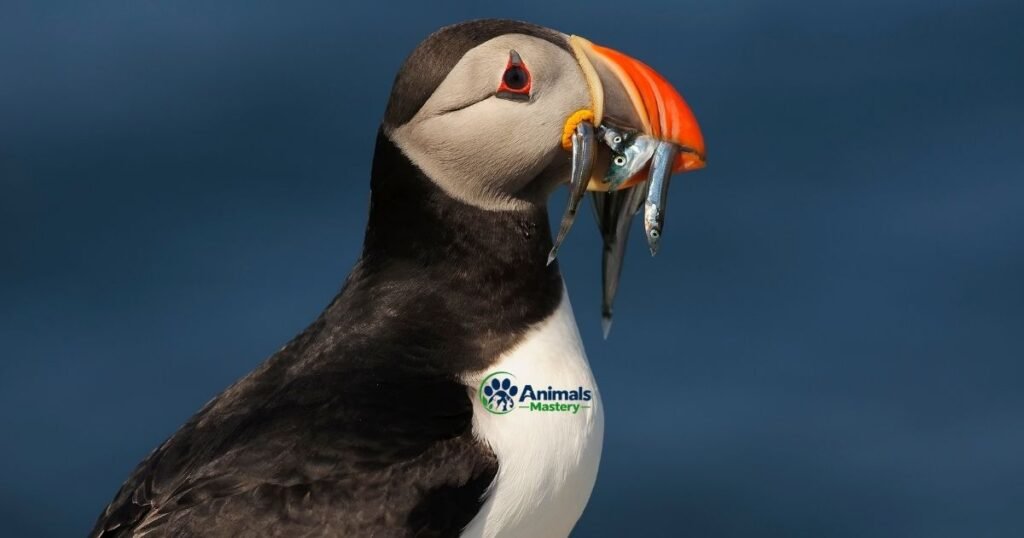
Puffins can plunge up to 60 feet underwater, using their wings to ‘fly’ through the water as they pursue schools of herring and mackerel, showcasing a fascinating blend of agility and precision.
On land, they nest in burrows dug into cliffside soil, a digging habit reminiscent of several animals like groundhogs.
The conservation status of the Atlantic Puffin raises critical concerns. As climate change alters marine ecosystems and fish populations fluctuate, these fish-eating seabirds face challenges that threaten their survival.
The decline of fish stocks not only impacts puffins’ ability to forage but also disrupts the delicate balance of marine biodiversity. .
Shoebill Stork
- Scientific Name: Balaeniceps rex
- Family: Balaenicipitidae
- Class: Aves
- Diet: Carnivore, eats fish, frogs, and small reptiles
The Shoebill Stork, with its massive bill that resembles an oversized shoe, is an emblem of intrigue in wetland habitats. This formidable bird is not just a visual spectacle; it is an ambush predator that epitomizes patience and precision in fish hunting.

Waiting silently among the tall grasses, the Shoebill can remain motionless for extended periods, perfectly camouflaged against the backdrop of its swampy domain. Once it spots unsuspecting fish, it strikes with astonishing speed, using its colossal bill to snatch prey with remarkable accuracy.
What sets the Shoebill apart from other fish-eating birds is its unique feeding strategy. Unlike more flamboyant fishing techniques seen in pelicans or herons, the Shoebill relies on stealth and an understanding of its environment to capitalize on movements beneath the water’s surface.
This adaptability allows it to thrive in the intricate web of life found within wetlands, showcasing not only the beauty of the avian world but also the delicate balance of ecosystems.
Pelicans
- Scientific Name: Pelecanus occidentalis
- Family: Pelecanidae
- Class: Aves
- Diet: Carnivore, eats fish
Pelicans are fascinating avian predators renowned for their remarkable fish-hunting abilities and cooperative feeding techniques. Utilizing their unique throat pouches, these birds can scoop up large quantities of water teeming with fish, showcasing an extraordinary adaptation to their aquatic environment.

This ability not only serves as a practical tool for capturing prey but also reflects a stunning evolutionary refinement, allowing them to thrive in diverse habitats ranging from serene lakes to bustling coastal areas.
The social dynamics among pelicans during feeding are equally captivating. In cooperative feeding, groups work in unison to drive schools of fish towards the shallows, maximizing their collective hunting success. This behavior highlights not just their intelligence but also their reliance on social structures for survival, painting a vivid picture of life in the wild.
Observing pelicans in action, with their synchronized movements and impressive dives, transforms the mundane act of feeding into a thrilling spectacle of nature’s choreography. Each hunting expedition is a testament to their adaptability, making pelicans not just survivors, but masters of their aquatic domain.
Albatross
- Scientific Name: Diomedea exulans
- Family: Diomedeidae
- Class: Aves
- Diet: Carnivore, eats fish, squid, and crustaceans
The albatross, a master of the open ocean, showcases a stunning fishing technique that highlights its dynamic soaring abilities. With wingspans that can exceed 12 feet, these majestic birds glide effortlessly across vast expanses of water, scanning the surface with their keen eyesight.

This remarkable vision allows them to spot schools of fish from miles away, making them adept hunters in the rich canvas of the ocean.
What truly sets the albatross apart is its energy-efficient flight strategy. By harnessing wind currents, these birds can travel thousands of miles without flapping their wings, conserving energy while searching for food.
When the albatross descends to catch a fish, it employs a swift, graceful dive, showcasing its agility. This remarkable combination of skill and efficiency positions the albatross as a symbol of resilience in the marine ecosystem, illustrating the intricate balance of nature and the art of survival on the high seas.
Common Tern
- Scientific Name: Sterna hirundo
- Family: Sternidae
- Class: Aves
- Diet: Carnivore, eats small fish and aquatic invertebrates
The Common Tern is a masterful fish hunter, showcasing remarkable adaptations that elevate its predatory skills. Equipped with keen eyesight, these birds can spot fish from impressive distances, scanning the water’s surface for telltale disturbances that signal potential prey.

Their ability to dive with precision is both a spectacle and a testament to their evolutionary prowess, plunging feet-first into the water, they often emerge victorious with a fish in tow.
One fascinating aspect of Common Tern behavior is their tendency to engage in group hunting. This social strategy enhances their fishing success, as they can coordinate their dives and share information about fish locations, creating a dynamic spectacle against the backdrop of open water.
Such teamwork not only maximizes their catch but also strengthens their social bonds, highlighting the intricate balance of survival and community among these avian athletes.
More Fascinating Bird Adaptations
Penguins may be fish-hunting specialists, but on land, their upright waddle places them among the more unusual animals that walk on two legs.
Herons, with their statuesque hunting stance, owe much of their success to their stilt-like build, a trait shared by many other birds with long legs.
And while Bald Eagles are formidable hunters, their willingness to scavenge when fish are scarce puts them in the same resourceful category as many scavenger birds that clean up ecosystems in their own way.
These overlapping traits are a reminder that even highly specialized hunters often carry a few surprising adaptations beyond their signature skill.
Final Thoughts
The world of Birds That Eat Fish is as diverse as it is fascinating. From the majestic ospreys to the agile kingfishers, each species showcases unique adaptations that enhance their fishing prowess.
Their striking appearances and skilled hunting techniques offer a glimpse into the intricate balance of ecosystems around water bodies. By understanding these remarkable Birds That Eat Fish, we can appreciate their vital role in nature.
Next time you spot a bird catching a fish, take a moment to admire the wonders of wildlife and consider supporting efforts to protect these incredible creatures.
FAQs
Do Birds Eat Fish?
Yes, many birds eat fish. Fish-eating birds usually catch them from rivers, lakes, oceans, and other bodies of water.
What Birds Eat Fish?
Birds that commonly eat fish include ospreys, eagles, herons, pelicans, cormorants, kingfishers, gulls, and penguins.
What Bird Mostly Eats Fish?
The osprey is one of the most fish-dependent birds. Fish make up the vast majority of its diet, and it is specially adapted for catching fish from water.
Do Eagles Eat Fish?
Yes, many eagles eat fish. Bald eagles and African fish eagles are especially well known for catching fish, although they also eat other prey when available.