Top 39 Birds With Long Legs (With Pictures & Facts)
Imagine standing beside a tranquil lake, witnessing a heron poised perfectly in the shallows, its long legs extended gracefully. Birds with long legs are a highlight of many ecosystems, embodying beauty and functionality.
This reading will guide you through the extraordinary world of these birds, explaining why their unique physical traits are crucial for their survival and role in nature’s balance. Discover the allure and significance of these fascinating avian athletes as we take flight into their world.
List of Birds with Long Legs
Here is the list of animals that have long legs:
- Great Egret
- Sarus Crane
- Limpkin
- Scarlet Ibis
- Secretary Bird
- Purple Gallinule
- Green Heron
- Jabiru
- Purple Heron
- Shoebill
- Whooping Crane
- Reddish Egret
- Cattle Egret
- Flamingos
- Great Blue Heron
- Ostrich
- Black-winged Stilt
- White-faced Ibis
- Tricolored Heron
- Sandhill Crane
- Snowy Egret
- Roseate Spoonbill
- Gray Heron
- Wood Stork
- Emu
- Black-crowned Night Heron
- Great Blue Heron
- American Avocet
- Black-necked Stilt
- Common Crane
- Demoiselle Crane
- Wattled Crane
- Blue Crane
- Grey Crowned Crane
- Marabou Stork
- African Openbill
- Asian Openbill
- Lesser Adjutant
- Greater Adjutant
- Black Stork
Great Egret
Scientific Name: Ardea alba
Dite: Fish, frogs, aquatic insects, crayfish, small mammals (like mice), and reptiles.
The Great Egret is a stunning example of elegance in the avian world, characterized by its long, slender legs that create a striking silhouette against the water. These long legs are not merely for show; they serve a critical purpose in hunting.
By wading through shallow waters, the Great Egret can stealthily stalk its prey, using its height to spot fish and amphibians that might otherwise go unnoticed. The bird’s elongated limbs also allow it to navigate through marshy terrain with ease, demonstrating a remarkable adaptation to its environment.
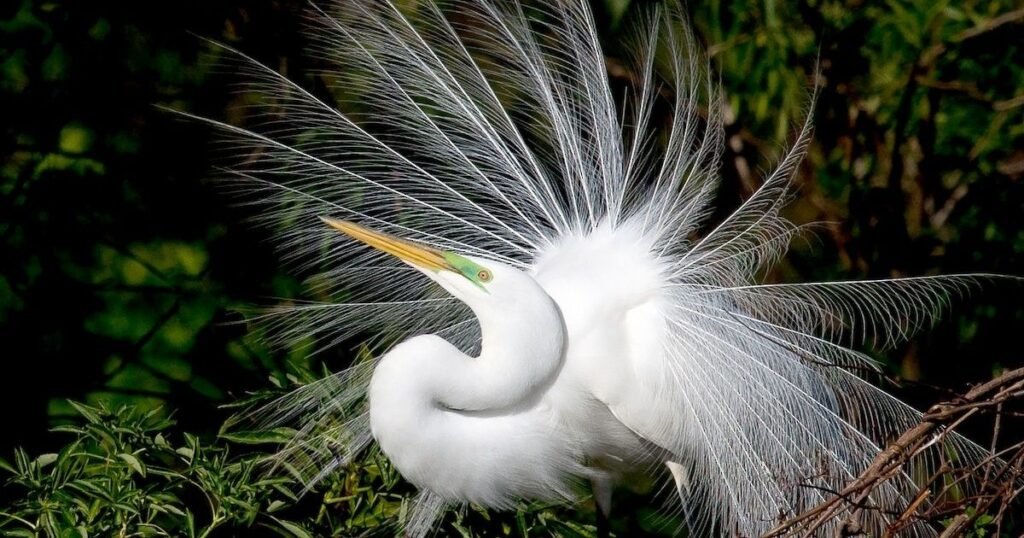
These heights also play a significant role in the Great Egret’s social behavior. During mating season, males perform elaborate displays, showcasing their stature and pristine plumage to attract females.
Sarus Crane
Scientific Name: Antigone
Dite: Seeds, grain, tubers, aquatic roots, insects, frogs, and small reptiles (omnivorous).
The Sarus Crane is renowned for its impressive long legs. These elegant birds can grow up to six feet tall, making them the tallest flying birds on the planet. Their elongated limbs serve a dual purpose; not only do they enable remarkable agility in navigating their wetland habitats, but they also allow them to wade into deeper waters to forage for aquatic plants and small fish.
This unique adaptation plays a significant role in their survival and shows how body structure can influence an organism’s ecological niche. The Sarus Crane is not just a marvel of physical design; its behavior is equally fascinating.
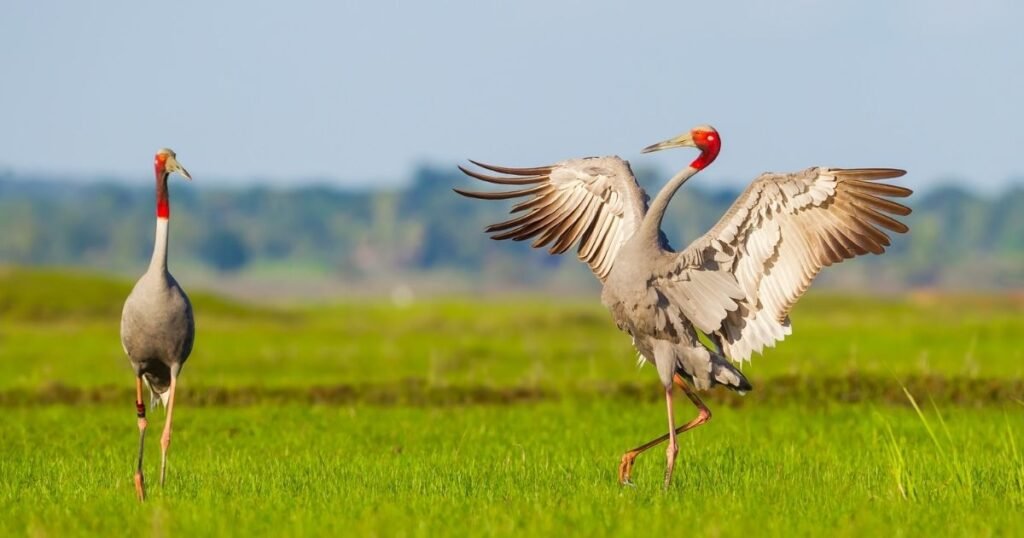
These birds engage in elaborate courtship dances, showcasing their grace and strength with each leap and bow. The unison of the Sarus Cranes during these displays is more than a mating ritual; it strengthens pair bonds and establishes territory.
Limpkin
Scientific Name: Aramus guarauna
Dite: Freshwater apple snails (primary diet), as well as mussels and insects.
Limpkins are often mistaken for herons or cranes. cralimpkin’sLimpkin’s long, slender legs are perfectly adapted for their lifestyle, allowing them to wade effortlessly through water while probing the muddy substrate in search of their primary delicacy: apple snails.
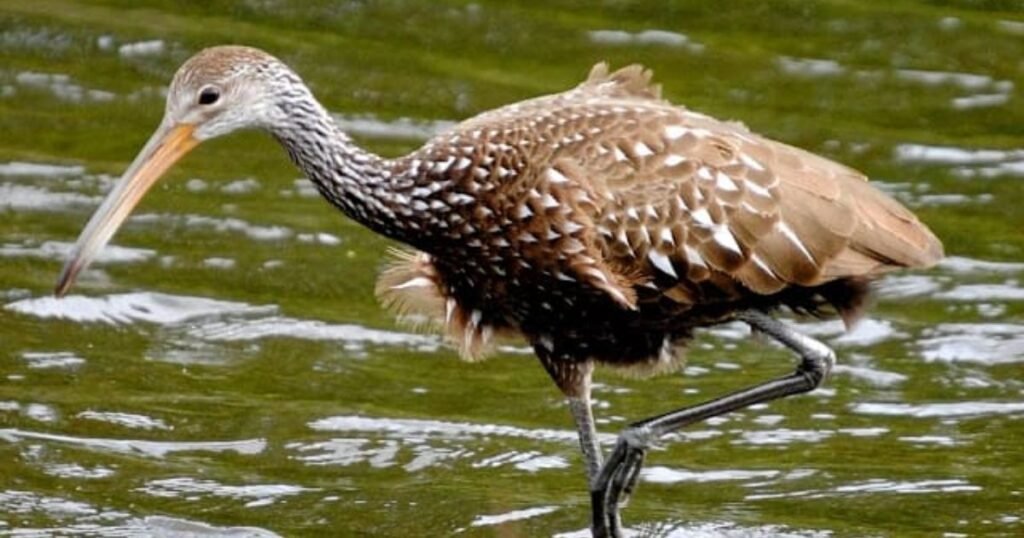
This specialized diet shapes their physical attributes and influences the ecosystem dynamics in their habitats, as the Limpkin plays a crucial role in controlling snail populations.
Scarlet Ibis
Scientific Name: Eudocimus ruber
Dite: Crabs, shrimp, aquatic insects, mollusks, and small fish (carotenoids in their crustacean diet give them their red color).
The Scarlet Ibis, for instance, is a brilliant example. With its vibrant red plumage and graceful stature, this bird navigates wetlands with poise, using its long, slender legs to wade through shallow waters in search of food.
These elongated limbs are not merely for show; they enable the Ibis to foray into areas where other birds can’t reach, foraging for crustaceans and small fish buried beneath the mud.
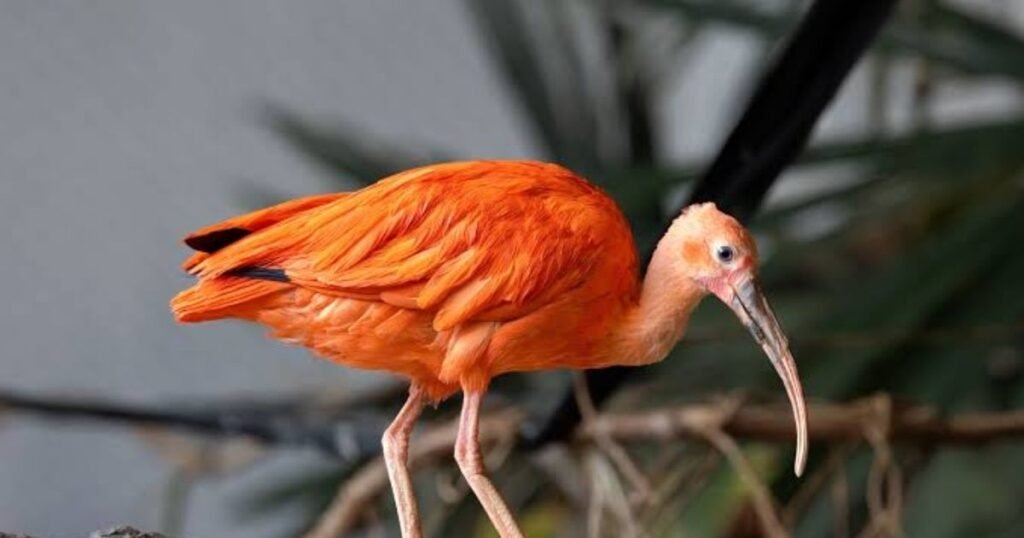
The long legs of such birds play a crucial role in their social interactions during breeding. The Scarlet Ibis showcases elaborate displays and synchronized movements, where its leggy gait provides a theatrical quality that enhances courtship rituals.
Secretary Bird
Scientific Name: Sagittarius serpentarius
Dite: Snakes (including venomous ones), lizards, rodents, insects, bird eggs, and small mammals (stomps prey to death).
The secretary bird, known for its striking height and unique hunting style, captures the imagination with its ability to cover vast African savannas in search of snakes.
Unlike many of its feathered counterparts, the Secretary Bird employs a particularly dramatic approach: it delivers powerful kicks to immobilize its prey. This remarkable behavior reflects the adaptability of long-legged birds, which often evolve unique strategies to thrive in their environments.
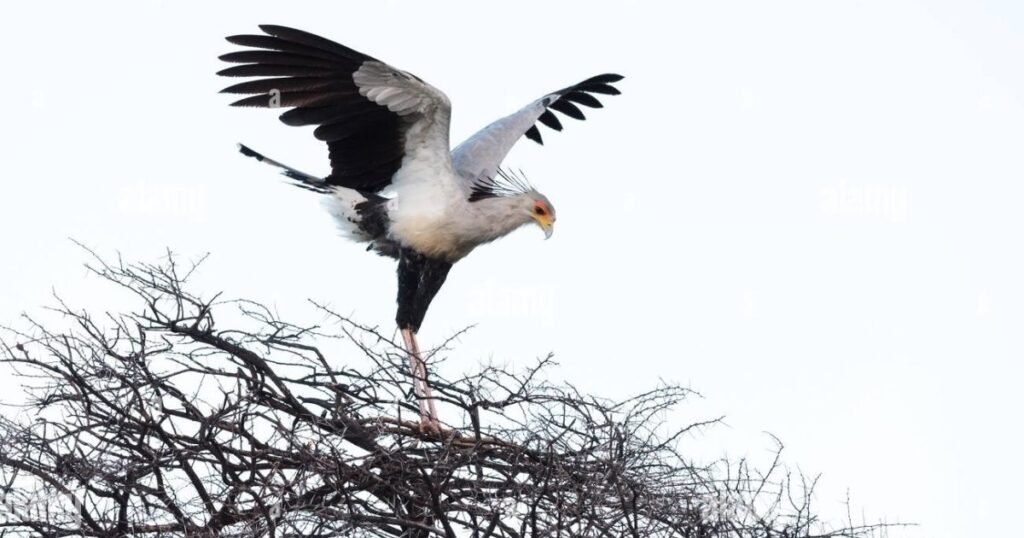
Their role in the ecosystem extends beyond their remarkable predatory skills; these birds also contribute to controlling rodent populations, showcasing a dynamic interplay between predator and prey. As habitats continue to change, the secretary bird and its long-legged kin symbolize resilience and the ongoing evolution of nature’s designs.
Purple Gallinule
Scientific Name: Porphyrio martinica
Dite: Plant seeds, leaves, aquatic fruits, insects, snails, frogs, and bird eggs.
The purple gallinule stands out not just for its vivid plumage but also for its elongated legs, perfectly designed for life in wetland habitats. These long legs allow the gallinule to navigate through marshy vegetation with remarkable agility, making it a master of its environment.
It’s not just a means of mobility; these legs grant the gallinule an advantage when foraging for food, such as insects and aquatic plants, which are often hidden beneath the thick, floating mats of vegetation it calls home.
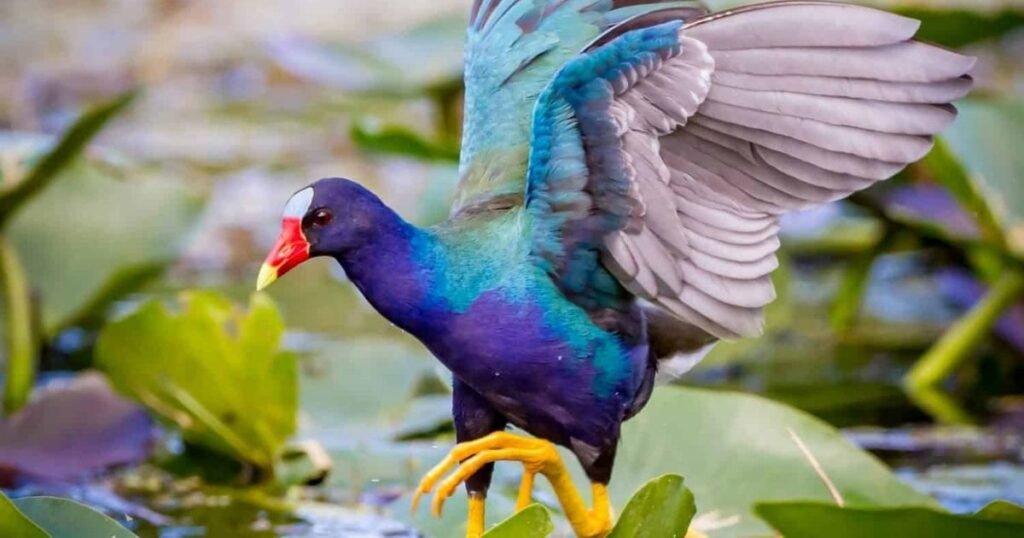
The purple gallinule has the unique ability to balance on slender reeds and lily pads, where many other birds would falter. This agility showcases an evolutionary finesse that allows it to evade predators and seek out nourishment.
Green Heron
Scientific Name: Butorides virescens
Diet: Small fish, crustaceans, aquatic insects, frogs, and tadpoles (sometimes uses lures like leaves or insects to catch fish).
Birds with long legs, such as the green heron, are a marvel of evolution, perfectly adapted to their wetland habitats. These graceful creatures are not just visually striking; their elongated limbs allow them to wade through shallow waters with unparalleled ease.
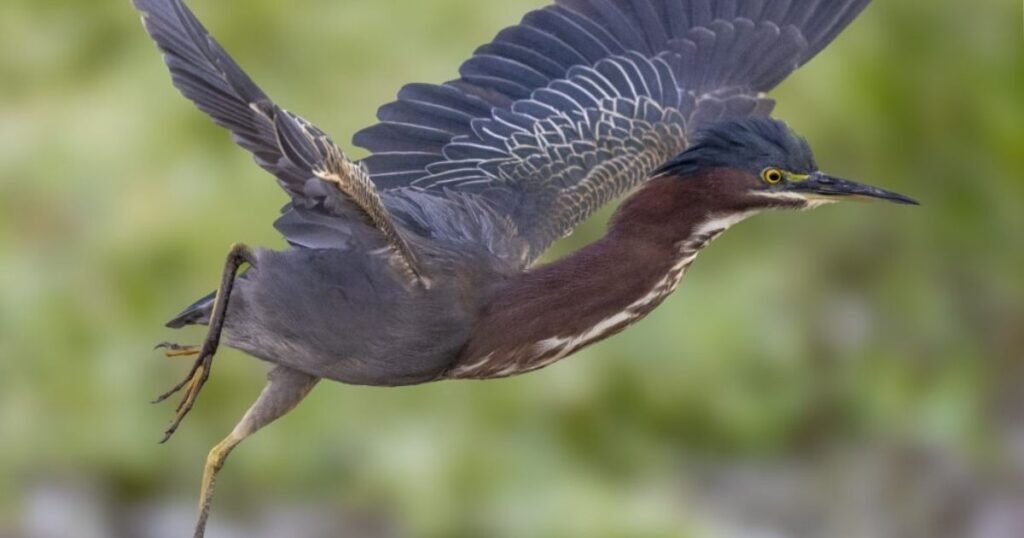
The green heron, in particular, employs these long legs to stealthily stalk its prey—small fish and amphibians—merging artistry with survival. With a keen sense of patience, it often stands motionless, creating a hypnotic tableau before making a sudden strike with impressive accuracy.
Their long legs enable them to access food sources that are often out of reach for shorter-legged species, allowing for a unique niche within their ecosystems.
Jabiru
Scientific Name: Jabiru mycteria
Dite: Fish, frogs, snakes, aquatic insects, snails, and young turtles.
Among the avian world, birds with long legs command attention and serve unique ecological roles. The Jabiru, a striking stork native to wetlands across Central and South America, is a perfect example.
Standing up to five feet tall, its long, spindly legs allow it to wade through shallow waters with grace, foraging for fish, amphibians, and crustaceans.
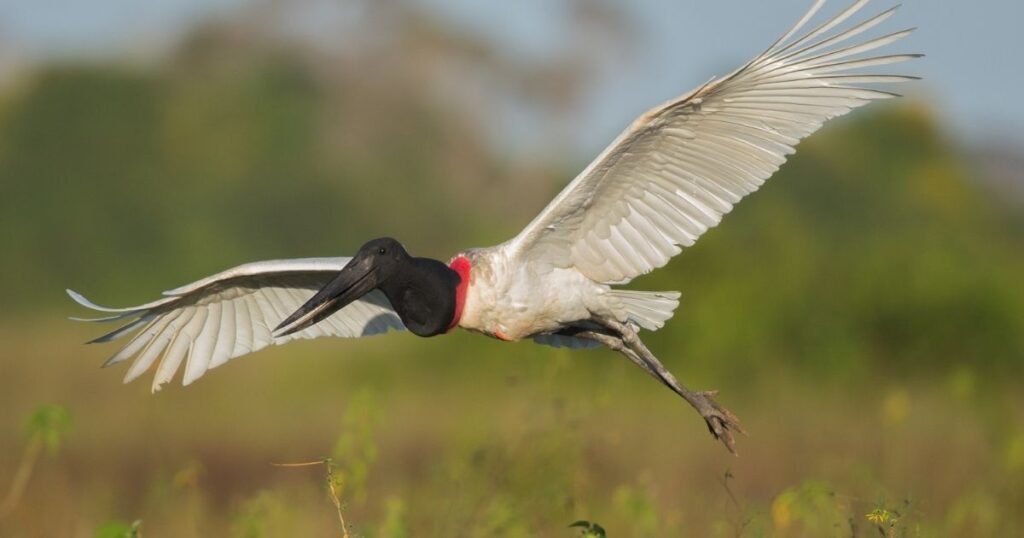
Observing their behavior can illuminate their lives and broader environmental shifts, reminding us that these long-legged wonders are barometers for the health of their habitats. Watching them glide effortlessly or nest in towering trees invites us to ponder the deep connections within nature’s intricate tapestry.
Purple Heron
Scientific Name: Ardea purpurea
Dite: Small fish, amphibians, rodents, snakes, and aquatic insects.
The purple heron, a striking figure in wetland ecosystems, captures attention with its elegant silhouette and remarkably long legs. These limbs are not merely aesthetic; they serve a crucial purpose in the bird’s survival strategy.
As highly skilled hunters, purple herons wade through shallow waters, using their elongated legs to navigate and hunt for fish and amphibians while maintaining a low profile.
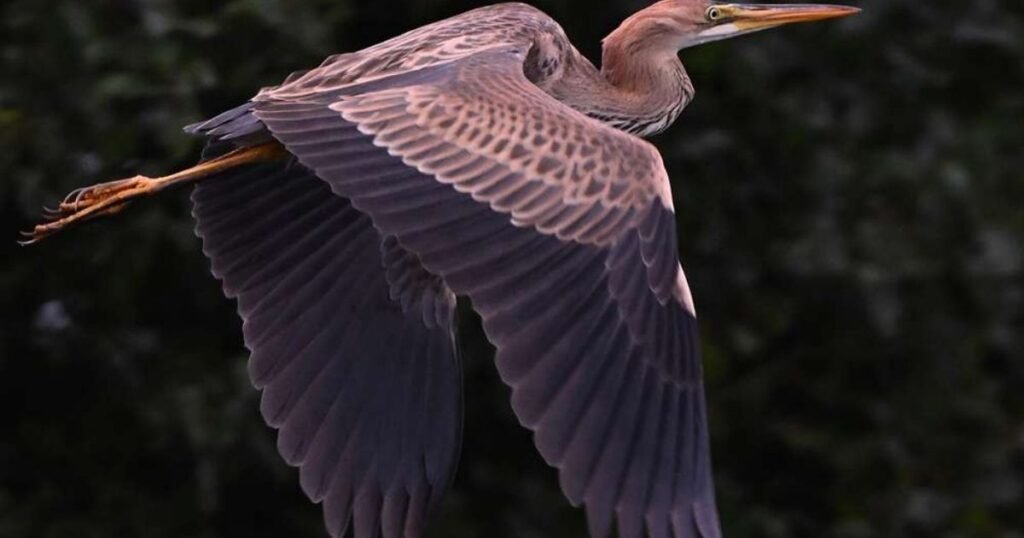
The long legs of the Purple Heron offer a fascinating glimpse into evolutionary adaptations. They allow these birds to forage in deeper waters than many of their peers, giving them access to a wider range of prey.
Shoebill
Scientific Name: Balaeniceps rex
Dite: Lungfish, catfish, water snakes, baby crocodiles, and frogs.
The shoebill stands as a striking example of long-legged elegance. This prehistoric-looking bird, native to the swamps of East Africa, is not just a visual marvel but also an apex predator in its habitat.
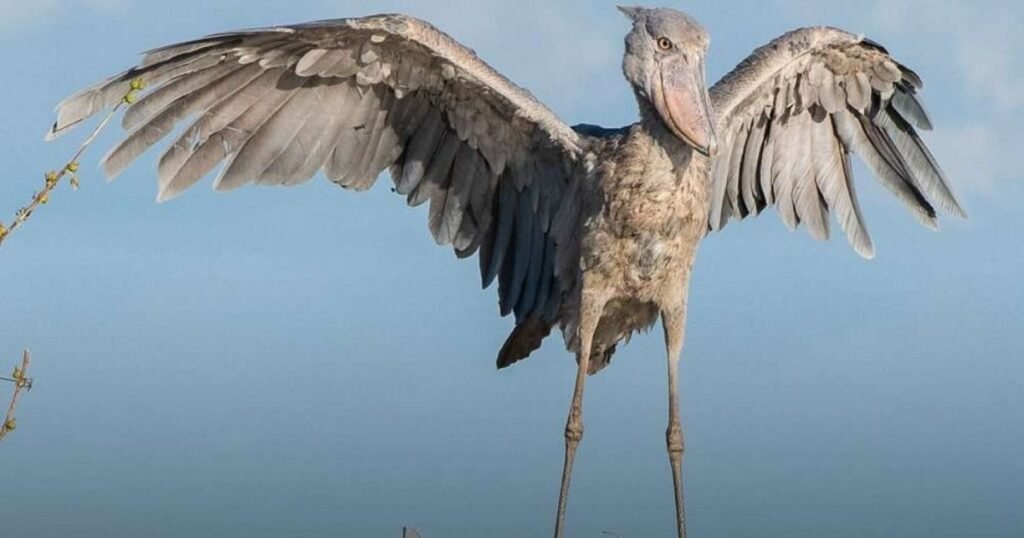
With legs that can reach nearly two feet in height, the shoebill wades gracefully through marshy waters, seamlessly blending its striking blue-grey plumage with the surrounding reeds. Its long legs provide stability and also allow for keen observation and stealth when hunting fish and amphibians.
Whooping Crane
Scientific Name: Grus americana
Dite: Blue crabs, clams, berries, acorns, insects, frogs, and small rodents.
The whooping crane stands as a remarkable icon among birds with long legs, reflecting a unique adaptation to its wetland habitat and a profound story of resilience and conservation. Standing nearly five feet tall, these majestic birds possess legs that elevate them above the water, allowing for greater visibility when foraging for food.
Their longevity and notable mating rituals, including synchronized dancing, highlight a deep-seated commitment to family bonds and territory.
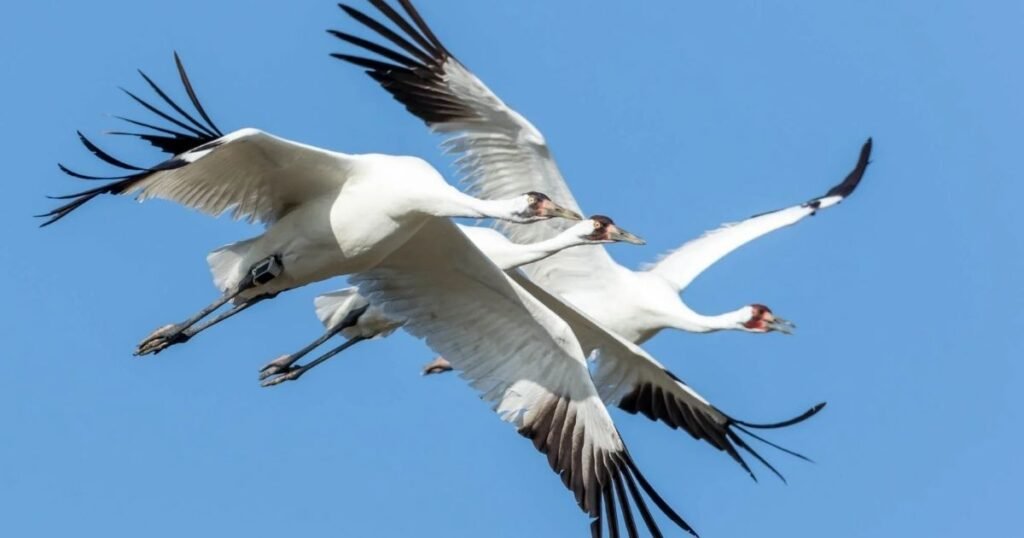
The elongated legs of the Whooping Crane are not merely for show; they serve vital ecological roles, helping maintain the health of the marshy ecosystems they inhabit. As they wade through shallow waters, their legs disturb the substrate, unearthing crustaceans and aquatic plants that feed them and sustain a diverse range of other wildlife.
Reddish Egret
Scientific Name: Egretta rufescens
Diet: Small fish, frogs, and crustaceans (often chase prey by running and flapping wings).
The reddish egret, a striking bird known for its long legs and dramatic hunting style, offers a fascinating glimpse into the world of avian adaptation. Found primarily in shallow coastal waters, this elegant creature employs an intriguing technique called “dance fishing.”
As it wades through the water, the reddish egret flares its wings and performs a series of swift movements to disorient fish, making them easier to catch.
Long legs serve a dual purpose for birds like the Reddish Egret, allowing them to traverse varied terrains with remarkable agility while also providing a competitive edge in catching prey. These slender limbs are often equipped with specialized joints that enhance balance and stability, enabling the bird to stand silently for extended periods in pursuit of its aquatic dinner.
Cattle Egret
Scientific Name: Bubulcus ibis
Diet: Grasshoppers, crickets, flies, beetles, frogs, and spiders (frequently follow grazing livestock to catch stirred-up bugs).
The cattle egret, a striking example of a bird with long legs, perfectly exemplifies nature’s ingenuity. These elegant creatures, often found grazing alongside livestock, have developed a remarkable symbiotic relationship with cattle.
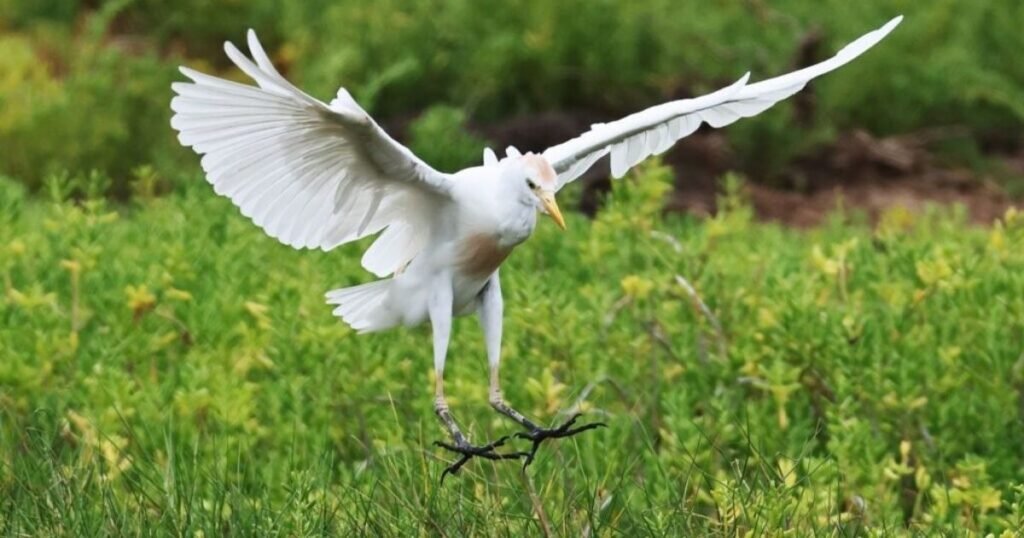
Their fascinating feeding habits: Cattle egrets are known for their unique mating rituals. During courtship, males display impressive posturing and plumage transformations, flaunting their long legs and vibrant breeding colors to attract females.
This visual spectacle is a testament to the importance of physical traits, as these long legs are not just a tool for foraging; they play a vital role in the survival of the species.
Flamingos
Scientific Name: Phoenicopteridae
Dite: Brine shrimp, blue-green algae, diatoms, and insect larvae (filter-feed using special comb-like structures in their bill).
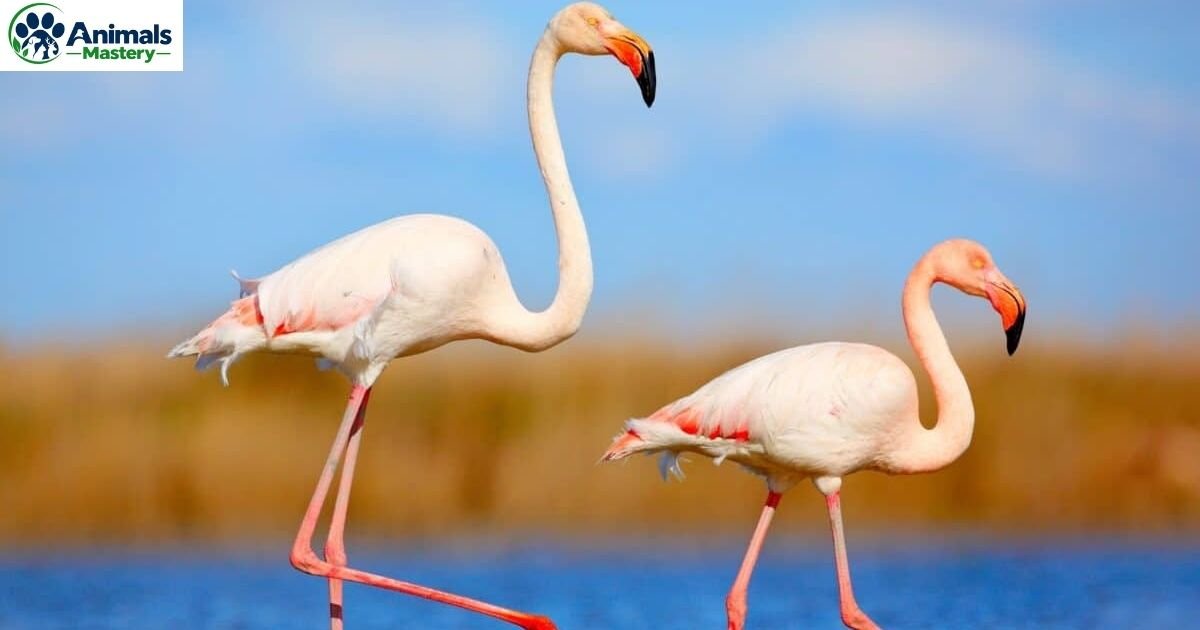
Flamingos are marvels of evolution, showcasing extraordinary adaptations that allow them to thrive in unique ecosystems. Their elongated legs enable them to wade into deeper waters than their shorter-legged counterparts, accessing food that many others can’t reach.
As they forage, their unique feeding technique, which involves sweeping their curved beaks through water, reveals how specialization in anatomy can lead to dietary advantages, allowing them to enjoy a diet rich in algae and crustaceans.
The pink hue of flamingos is a direct result of their diet. The carotenoid pigments found in the algae and brine flies they consume transform their feathers from gray to the vibrant pink that is so iconic.
Great Blue Heron
Scientific Name: Ardea herodias
Dite: Fish, frogs, salamanders, snakes, rodents, small birds, and aquatic insects.
The Great Blue Heron, a master of stealth and grace. Found near wetlands and shorelines, this bird uses its elongated limbs to wade through shallow waters, expertly foraging for fish and amphibians.
The heron’s long legs are not merely for show; they enable precise movement in aquatic environments, allowing it to minimize disturbances while hunting.
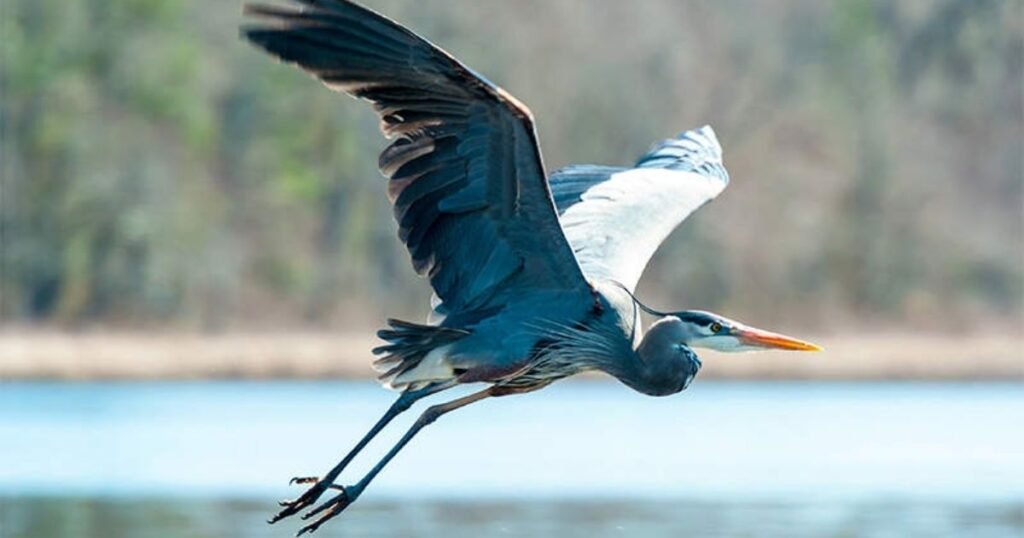
The Great Blue Heron’s tall stature also plays a crucial role in thermoregulation. With a higher vantage point, it can easily spot potential predators or competitors.
This adaptability is further highlighted during breeding seasons when these birds perform elaborate courtship displays that showcase their impressive limbs.
Ostrich
Scientific Name: Struthio camelus
Dite: Seeds, roots, leaves, shrubs, flowers, and occasionally insects or lizards (herbivorous/omnivorous).
The ostrich, the world’s largest bird, is a marvel of adaptation with its long, powerful legs designed for both speed and survival. Capable of running up to 45 miles per hour, these towering avians can cover vast distances in search of food and water, making them adept at navigating the arid landscapes of Africa.
Their legs are not just for speed; they possess a unique musculature that allows them to deliver formidable kicks, a defense mechanism against predators.
Black-winged Stilt
Scientific Name: Himantopus himantopus
Dite: Aquatic insects, mollusks, crustaceans, worms, and tadpoles.
These elegant creatures, known for their striking black and white plumage and remarkably long legs, are expert foragers, skillfully wading through shallow waters in search of invertebrates and small fish.
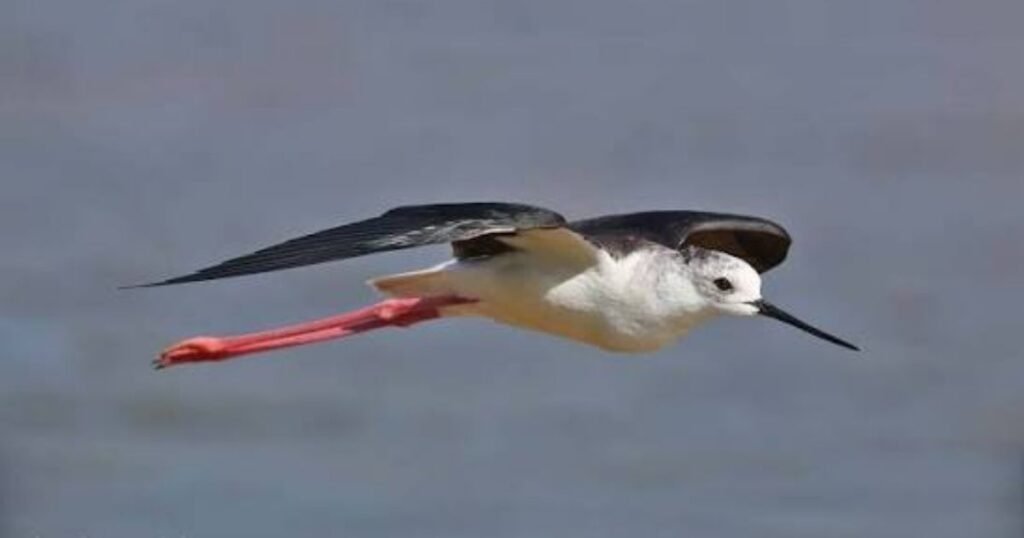
Their legs, which can measure up to 15 inches, allow them to probe deeper than many of their peers, giving them a competitive edge in feeding grounds. What’s particularly captivating about the black-winged stilt is how their long legs aid in their unique mating rituals.
During courtship, males engage in a mesmerizing dance, accentuating their physical prowess to attract potential mates. This fluid motion and aerial display serve as a visual feast for observers and emphasize the role of leg length in sexual selection among birds.
White-faced Ibis
Scientific Name: Plegadis chihi
Diet: aquatic insects, earthworms, crayfish, snails, and small fish.
The white-faced ibis stands out among birds with long legs, combining elegance with exceptional adaptability. Found in wetlands around the world, these striking birds showcase their long, slender limbs as they wade through shallow waters in search of food.
Their unique physical attribute is not just for show; it allows them to forage in deeper mud, where many other birds cannot reach. The long legs are a tool for survival, enabling them to strike a delicate balance between grace and utility.
The white-faced ibis serves as a reminder of the beauty and ingenuity of nature, thriving in diverse environments while effortlessly showcasing the benefits of its long legs. Whether in vibrant bogs or serene marshes, these birds captivate birdwatchers and nature lovers alike, making each sighting a moment to cherish.
Tricolored Heron
Scientific Name: Egretta tricolor
Dite: Small fish, crustaceans, aquatic insects, tadpoles, and frogs.
The tricolored heron stands out for its striking plumage and for its elegant, elongated legs that elevate it above the water’s surface. These long legs serve more than just an aesthetic purpose; they are vital for stalking prey.
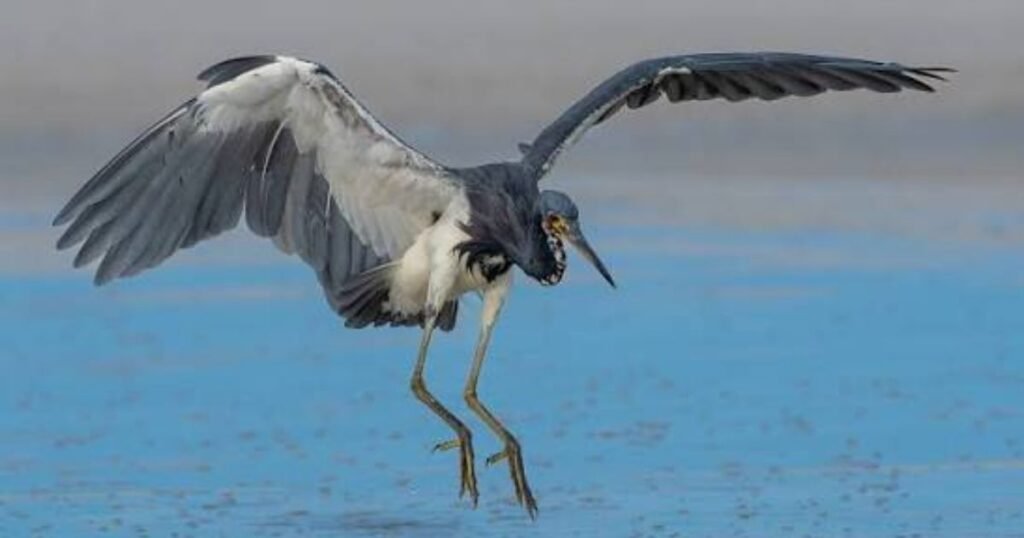
The heron wades through shallow waters, using its height to survey its surroundings and spot fish, amphibians, and crustaceans with remarkable precision. Witnessing this graceful dance as it deftly balances on one leg while the other hovers just above the water can feel almost hypnotic.
The leg length of the tricolored heron is a fascinating adaptation that enhances its foraging efficiency. The longer the legs, the deeper the reach into the murky depths, allowing the heron to access food sources that shorter-legged birds might overlook.
Sandhill Crane
Scientific Name: Antigone canadensis
Dite: Plant tubers, seeds, grains, berries, insects, worms, snails, and small mammals.
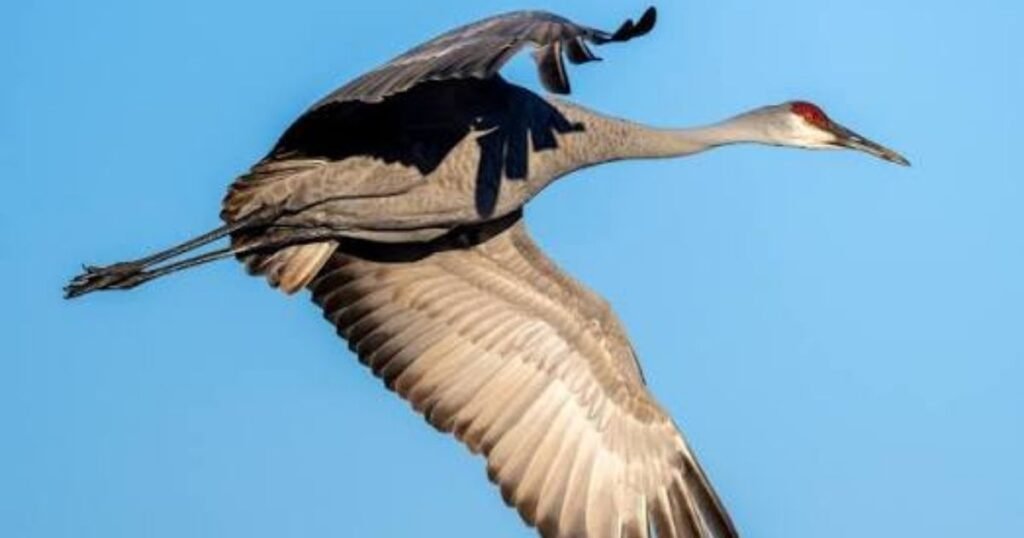
The sandhill crane, with its elongated legs, is a masterful embodiment of grace and stature in the avian world. These remarkable birds can often be spotted wading through shallow wetlands, their long limbs adapting perfectly to the aquatic environment.
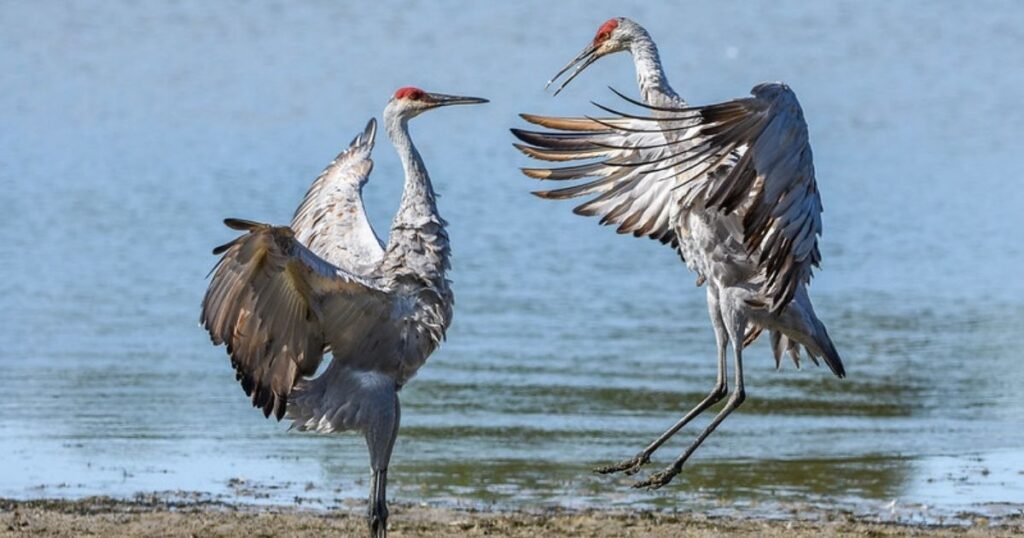
What sets them apart is not just their physicality but also their intricate social behaviors; during courtship, they engage in elaborate dances that highlight their agility and strength. Observing these displays offers a fascinating glimpse into the complexity of avian communication and bonding.
Beyond the sandhill crane, long-legged birds like the heron and stilt demonstrate how evolutionary traits can lead to diverse survival strategies. Their height allows them to forage efficiently in murky waters while also providing a vantage point to scan for predators.
Snowy Egret
Scientific Name: Egretta thula
Dite: Small fish, crustaceans, aquatic insects, frogs, and worms.
The snowy egret stands out in the avian world not just for its striking white plumage but also for its remarkably long legs that allow it to wade gracefully through shallow waters. These elongated limbs serve a dual purpose: they provide stability while hunting and enable the bird to navigate its aquatic habitats with ease.
This adaptation is a testament to evolution’s capacity to fine-tune species for survival, allowing the snowy egret to thrive in environments where others may flounder. Watching a snowy egret in action is akin to witnessing nature’s ballet.
As it stalks its prey, the bird uses both its legs and its sharp eyesight to pinpoint movement beneath the surface, showcasing a blend of elegance and efficiency.
Roseate Spoonbill
Scientific Name: Platalea ajaja
Diet: Small fish, crustaceans, aquatic insects, and mollusks (sweep spoon-shaped bill back and forth underwater).
The Roseate Spoonbill, with its striking pink plumage and elongated legs, is a true marvel of avian adaptation. These long-legged birds wade gracefully through shallow waters, showcasing their unique foraging technique that sets them apart from other species.
Their spoon-shaped bill, designed for sifting through mud and shallow pools, allows them to extract morsels like small fish and crustaceans, turning each meal into a fascinating display of nature’s ingenuity.
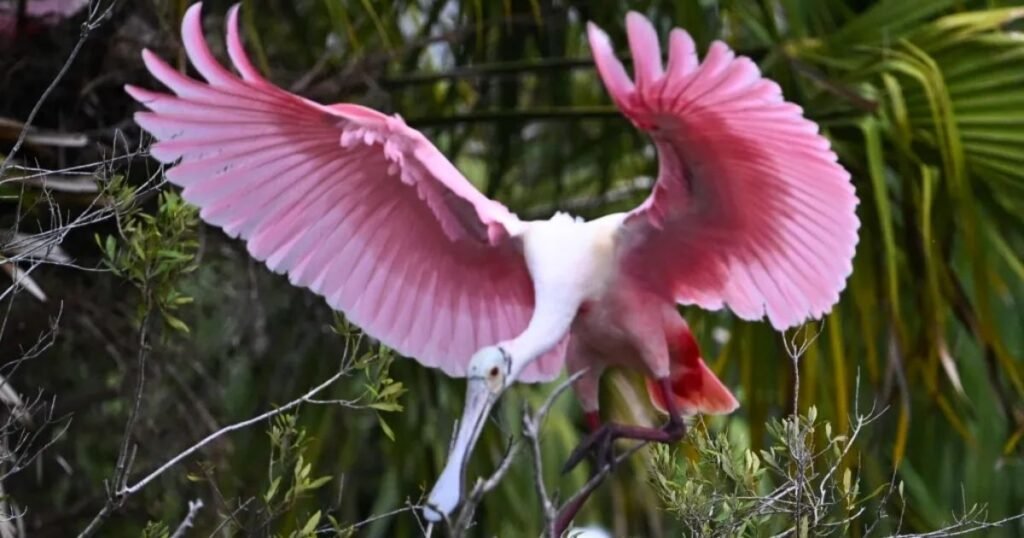
Roseate Spoonbills serve as vital indicators of ecosystem health. Their presence signals thriving wetlands, as they rely on these environments for breeding and nourishment. Habitat loss poses a significant threat to their populations.
Observing a Roseate Spoonbill in its natural habitat often becomes a meditative experience, transforming the act of birdwatching into a deeper appreciation for the delicate balance of nature.
Gray Heron
Scientific Name: Ardea cinerea
Dite: Fish, amphibians, small mammals, reptiles, and young birds.
The gray heron, with its towering stature and graceful long legs, epitomizes elegance in the avian world. These striking birds can often be seen standing still along riversides and lakeshores, blending seamlessly into their surroundings as they employ a patient hunting strategy.
Their elongated limbs serve not just for wading through shallow waters but also for striking at prey with remarkable precision, capturing fish and amphibians in a mesmerizing display of skill.
What truly fascinates many birdwatchers is the gray heron’s adaptability. Their ability to thrive in diverse habitats—ranging from urban parks to remote wetlands—speaks to their resilience.
Wood Stork
Scientific Name: Mycteria americana
Diet: Fish, frogs, crustaceans, large aquatic insects, and small reptiles (uses tactolocation—snapping its beak shut upon contact).
The wood stork, a striking bird with long legs, captivates observers as it wades gracefully through shallow waters. Unlike many other storks, the wood stork relies on its unique foraging technique, utilizing its sensitive bill to detect prey in murky waters.
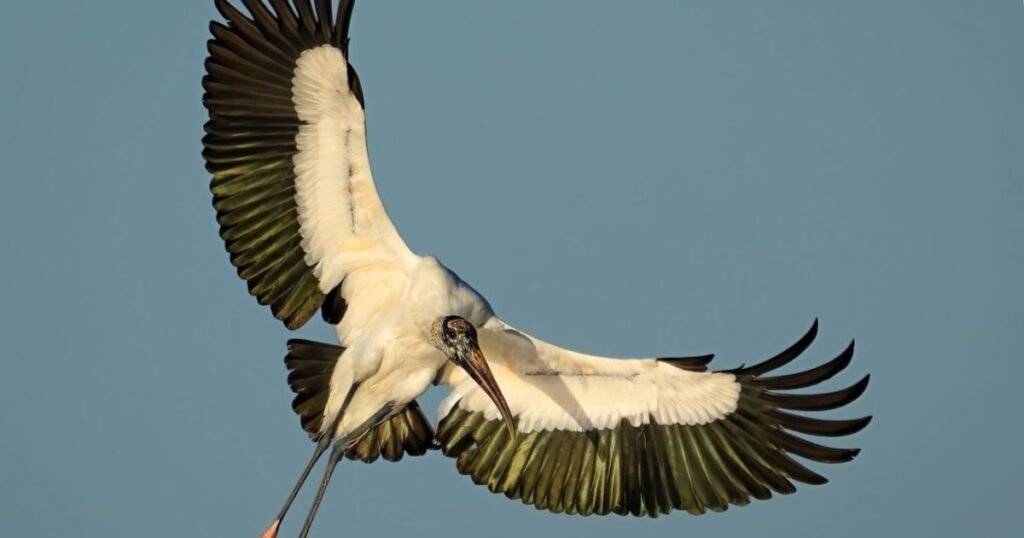
This method showcases a remarkable adaptation; the stork rapidly opens and closes its bill to capture fish, sometimes striking with astonishing speed and precision. One of the most fascinating aspects of the wood stork’s behavior is its communal nesting habits.
These birds often come together in large colonies, creating a bustling avian community. Here, the long legs that are so defining of their stature also serve as a symbol of resilience, enabling them to navigate a variety of wetland habitats.
Emu
Scientific Name: Dromaius novaehollandiae
Diet: Seeds, fruits, flowers, young plant shoots, insects (grasshoppers, caterpillars), and small animals.
The emu, a flightless bird native to Australia, boasts stunning long legs that aid in impressive speed and serve as a fascinating evolutionary trait. With the ability to sprint at speeds of up to 30 miles per hour, these agile giants navigate the diverse landscapes of their homeland with grace.
Their long legs are perfectly adapted for the vast, open terrains they roam, allowing them to cover vast distances in search of food and water. The emu’s legs play a crucial role in its reproductive success.
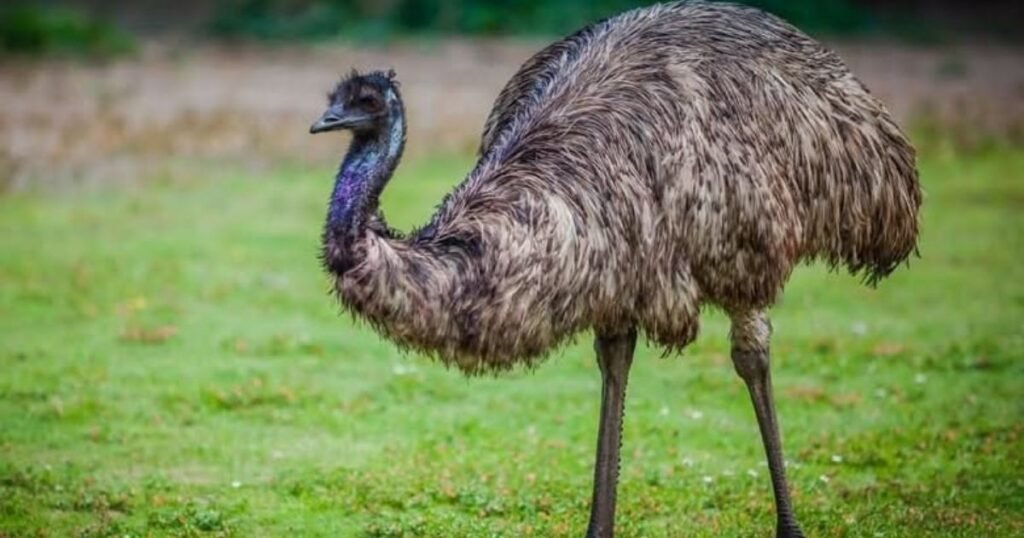
During courtship, male emus use their strong limbs to perform elaborate displays, showcasing their vitality to potential mates.
In observing the emu, one can appreciate how nature has sculpted this remarkable bird into a symbol of endurance and adaptability, embodying the delicate balance between survival and the beauty of the natural world.
Black-crowned Night Heron
Scientific Name: Nycticorax nycticorax
Dite: Fish, crustaceans, frogs, aquatic insects, small rodents, and bird eggs.
The Black-crowned Night Heron, with its striking long legs and distinctive silhouette, is a master of both stealth and elegance. Unlike many other herons, this nocturnal bird thrives in the dim light of twilight and dawn, showcasing how adaptability can reshape behavior.
Its elongated limbs facilitate graceful movement through shallow waters, where it stalks prey with astounding precision.
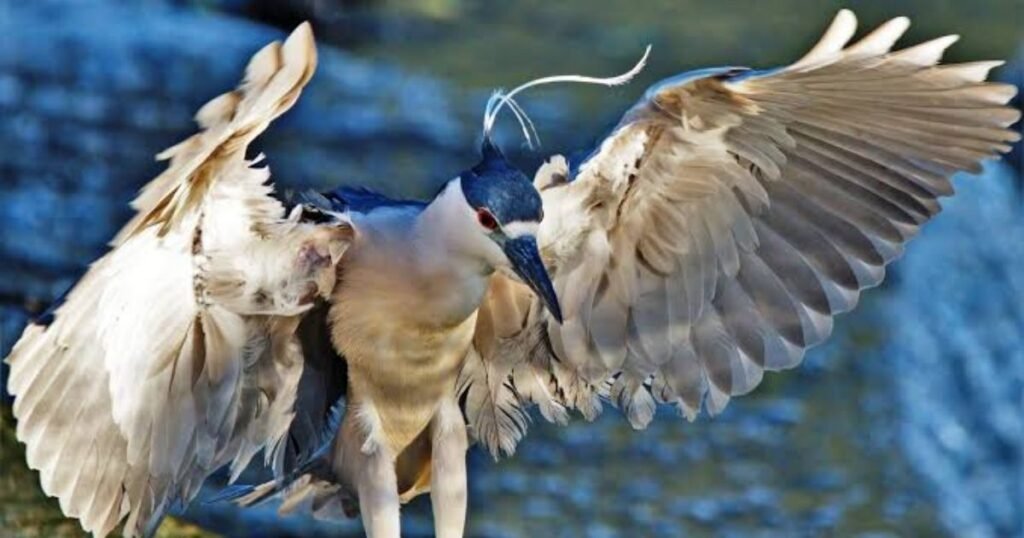
These birds’ long legs serve more than just a practical purpose; they symbolize the intersection of beauty and functionality in the avian world. When standing still, the heron often adopts a statue-like posture, blending seamlessly into its surroundings.
American Avocet
Scientific Name: Recurvirostra americana
Diet: aquatic insects, crustaceans, seeds, and small invertebrates (sweep bill side to side in shallow water).
The American Avocet, for instance, stands out with its striking plumage and elongated limbs that allow it to wade gracefully through shallow waters. These long legs are not just for show; they play a crucial role in foraging. As the Avocet sweeps its bill side to side, it stirs up sediment, making it easier to find tasty morsels hidden beneath the surface.
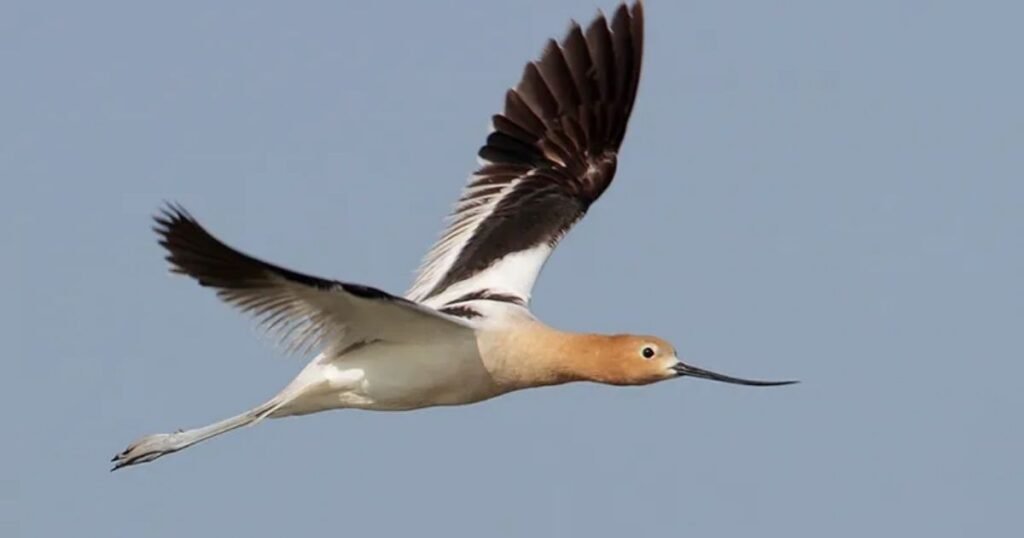
The American avocet serves as an evolutionary response to their ecological niche. Their slender legs minimize disturbance in delicate wetland ecosystems while allowing them to traverse muddy terrains effortlessly.
This enhances their foraging efficiency and underscores a fascinating interplay between physical adaptations and habitat utilization.
Black-necked Stilt
Scientific Name: Himantopus mexicanus
Dite: Aquatic insects, crustaceans, worms, snails, and small fish.
The black-necked stilt, for instance, with its elegant form and tall, slender legs, is perfectly designed for life in shallow waters, where it forages for small aquatic creatures. Its long legs allow it to wade through marshes and mudflats, probing into depths where other birds struggle to reach.
This adaptation enhances its foraging efficiency and provides a unique vantage point to spot potential threats or prey. The impressive height of these legs can also be a statement of presence.
The black-necked stilt often stands poised, showcasing its contrasting black and white plumage, making it a striking figure against the backdrop of wetlands. This look isn’t just for show; it plays a role in mating displays, where height can signal health and vitality to potential partners.
Common Crane
Scientific Name: Grus grus
Diet: Roots, seeds, berries, grain, insects, snails, worms, and small vertebrates.
The common crane, for instance, stands tall in stature and in cultural significance across various societies, symbolizing longevity and fidelity. These elegant birds navigate wetlands with poise, their lengthy legs allowing them to wade through shallow waters in search of food while maintaining an impressive balance.
Its elaborate courtship dance sets the common crane apart, a mesmerizing display that showcases their agility and coordination. During these rituals, the birds leap and bow, emphasizing their long legs as essential to their intricate movements.
This unique adaptation is not just an aesthetic trait but a critical tool in their survival, enabling them to reach rich feeding grounds and avoid predators lurking in the wetland vegetation.
Demoiselle Crane
Scientific Name: Grus virgo
Diet: Seeds, grain, shoots, insects, lizards, and small animals.
The Demoiselle Crane stands out for its ethereal beauty and for its remarkable adaptations. With long, slender legs that seem almost otherworldly, this crane is a master of elegance and efficiency.
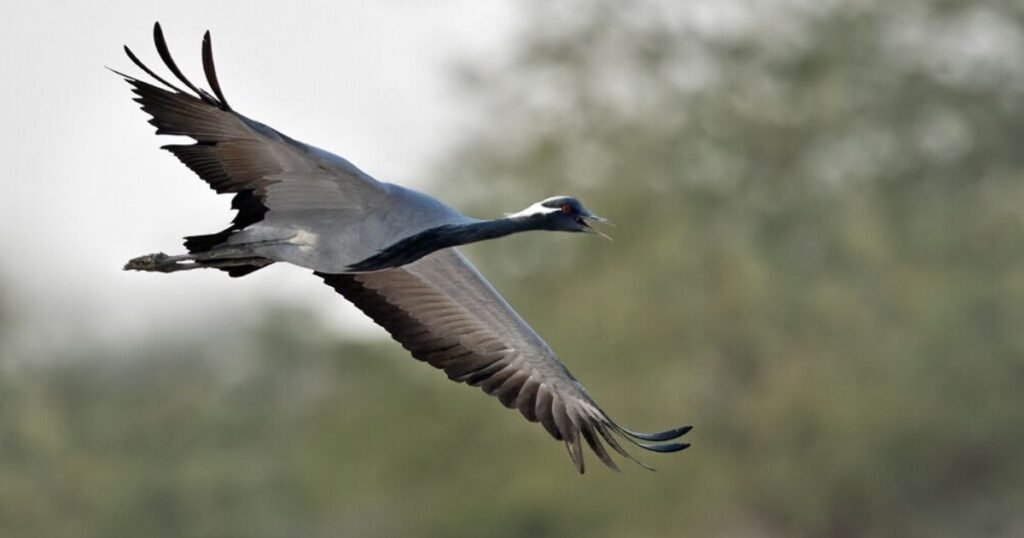
These elongated limbs are perfectly sculpted for wading through shallow waters, allowing the demoiselle to forage for aquatic insects and plant matter while maintaining a graceful stance.
The striking contrast between the Demoiselle’s long legs and the robust bodies of other birds reveals an evolutionary tale of survival. In the vast grasslands of Eurasia, where habitat can be both a blessing and a curse, these cranes utilize their height to scout for predators while blending effortlessly into the striking landscape.
Wattled Crane
Scientific Name: Grus carunculata
Dite: Aquatic plants, tubers, water lily rhizomes, frogs, and aquatic insects.
Take the wattled crane, for instance—its slender, elongated limbs elevate it to an impressive height, allowing it to traverse wetlands and marshes with grace.
The Wattled Crane, with its unique behavioral adaptations, plays a part in maintaining the delicate balance of wetland habitats. By stirring up the mud with its feet, it uncovers hidden food sources, inadvertently assisting in nutrient cycling.
This aspect of their feeding behavior illustrates how the physical traits of long-legged birds extend beyond mere aesthetics; they are intrinsically linked to the health of their environments.
Blue Crane
Scientific Name: Grus paradisea
Dite: Seeds, roots, grain, grasshoppers, caterpillars, frogs, and small reptiles.
The Blue Crane, a striking species native to Southern Africa, showcases its stunning plumage and an impressive pair of long legs that serve a vital role in its habitat. These long legs are not merely for show; they are perfectly adapted for wading through shallow waters where the blue crane forages for food.
Gliding gracefully on the wetlands, this bird uses its elongated limbs to navigate obstacles and maintain balance on uneven terrain, showcasing both elegance and efficiency in motion.
The long legs of the Blue Crane play a pivotal role in its social behaviors. During courtship displays, these graceful appendages add to the bird’s overall allure, emphasizing its height and stature as it performs intricate dances to attract a mate.
Observers often find themselves captivated by these elaborate rituals, which are enhanced by the crane’s long legs that amplify its movements and contribute to a striking visual spectacle.
Grey Crowned Crane
Scientific Name: Balearica regulorum
Diet: Grass seeds, grain, insects, frogs, lizards, and small invertebrates.
The Grey-crowned Crane, with its striking silhouette and elongated legs that seem almost too elegant for the ground. These cranes have adapted to a life in wetlands and grasslands, where their long legs enable them to wade gracefully through shallow waters in search of food.
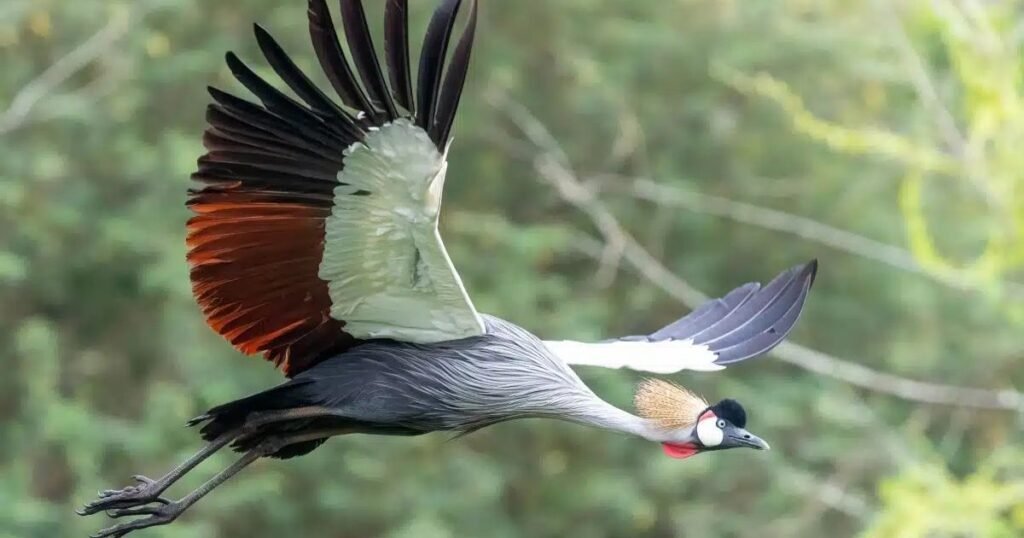
Unlike many birds whose legs are merely functional, the grey crowned crane’s legs become an extension of its personality; they exude a sense of majesty and poise as the birds dance and display during mating rituals, captivating anyone fortunate enough to witness such a performance.
The relationship between leg length and habitat is fascinating. Long legs are not just a stylish feature; they allow these cranes to thrive in environments where shorter-legged birds might struggle. As they navigate muddy terrains, gray-crowned cranes can reach vegetation that others cannot, feeding on seeds, insects, and small amphibians.
Marabou Stork
Scientific Name: Leptoptilos crumenifer
Dite: Carrion (dead animals), fish, frogs, snakes, insects, young birds, and human refuse (scavenger).
The marabou stork, a master of adaptation with its strikingly long legs. These impressive limbs serve a dual purpose; not only do they allow the stork to wade through shallow waters with grace, but they also elevate it above the muck and mire of its often untidy environment.
The marabou stork embodies the art of survival, thriving in regions where others might struggle due to the scarcity of nutrients. Beyond their functional use, the long legs of these storks can also symbolize resilience and adaptability in the natural world.
While they forage for carrion and scraps, their towering stature allows them to observe vast stretches of land, granting them an advantage in spotting food—an evolutionary trait that speaks to their cleverness.
African Openbill
Scientific Name: Anastomus lamelligerus
Dite: aquatic snails, freshwater mussels, frogs, and aquatic insects (uses a specialized bill to extract snail meat).
These wading birds are uniquely equipped for life in wetland habitats, where their elongated limbs give them the ability to navigate shallow waters with ease.
Unlike many of their counterparts, the African Openbill boasts a distinctive bill that allows it to feed primarily on aquatic snails, showcasing how specialized adaptations can define dietary habits and bird behavior.
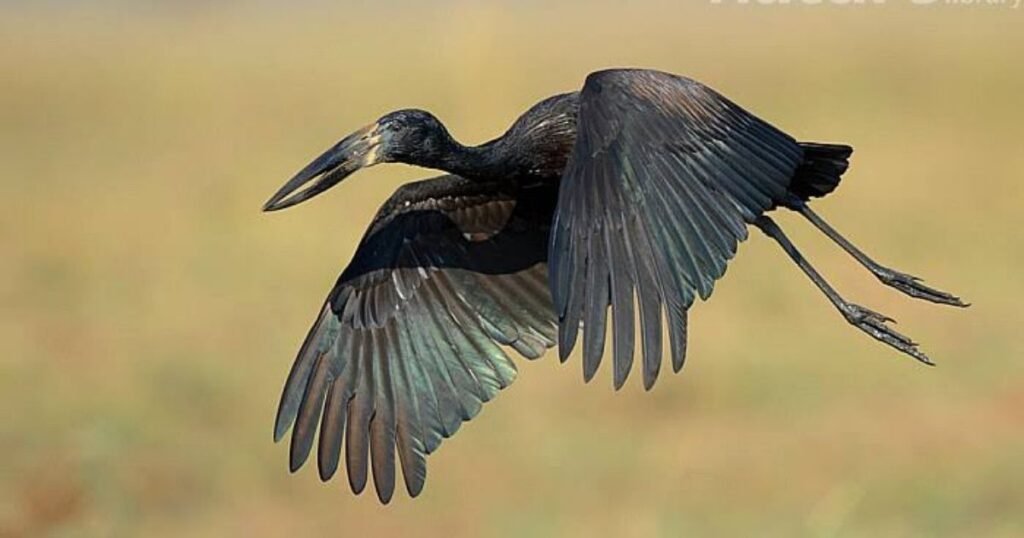
Observing the African Openbill in its natural habitat reveals a complex relationship with its environment. As they forage, these birds create ripples in the water, inadvertently stirring up potential prey and altering the ecosystem around them.
This interaction highlights the far-reaching impacts of avian life on wetland dynamics, reminding us that birds with long legs are not just graceful figures but crucial players in their ecological narratives.
Asian Openbill
Scientific Name: Anastomus oscitans
Dite: Snails, freshwater mussels, frogs, crabs, and insects.
The Asian openbill, a remarkable bird adorned with long, slender legs, presents a fascinating example of evolution’s artistic flair. These storks, predominantly found in wetlands across South and Southeast Asia, are not just visually striking; their long legs enable them to wade through shallow waters with grace and precision.
This adaptation is crucial for their feeding habits, as they primarily hunt for mollusks, like snails, which they extract from muddy substrates. The deft, elegant motion of their legs allows them to forage efficiently, showcasing the intricate relationship between anatomy and survival in the wild.
Observing the social behaviors of the Asian Openbill reveals a complex community life. They are often seen in large flocks, engaging in synchronized movements that enhance foraging efficiency and foster social bonds.
Their long legs play a significant role in these formations, allowing for agile maneuvers while striding through their habitat. The Asian Openbill embodies the perfect blend of beauty, adaptation, and social structure, inviting enthusiasts to appreciate the subtleties of avian life through a fresh lens.
Lesser Adjutant
Scientific Name: Leptoptilos javanicus
Diet: Fish, frogs, reptiles, large insects, and small rodents.
The lesser adjutant, for instance, is a magnificent stork native to Southeast Asia. Its long legs allow it to wade through shallow waters to forage for food, showcasing a striking display of adaptability. What’s truly fascinating about long-legged birds like the Lesser Adjutant is their ability to seamlessly blend beauty with function.
The stark contrast of their long limbs against the backdrop of lush wetlands becomes a stunning visual metaphor for survival and resilience in challenging environments.
These birds have developed unique feeding techniques that involve both probing and grasping with their beaks, demonstrating an evolutionary marvel.
Greater Adjutant
Scientific Name: Leptoptilos dubius
Dite: Carrion, fish, frogs, reptiles, small mammals, and waste from dumps.
The Greater Adjutant, a striking stork-like bird, is known for its impressive stature and unique behavior. With legs that seem to stretch endlessly, it wades through shallow waters searching for fish and carrion, showcasing an evolutionary design that facilitates feeding in varied habitats.
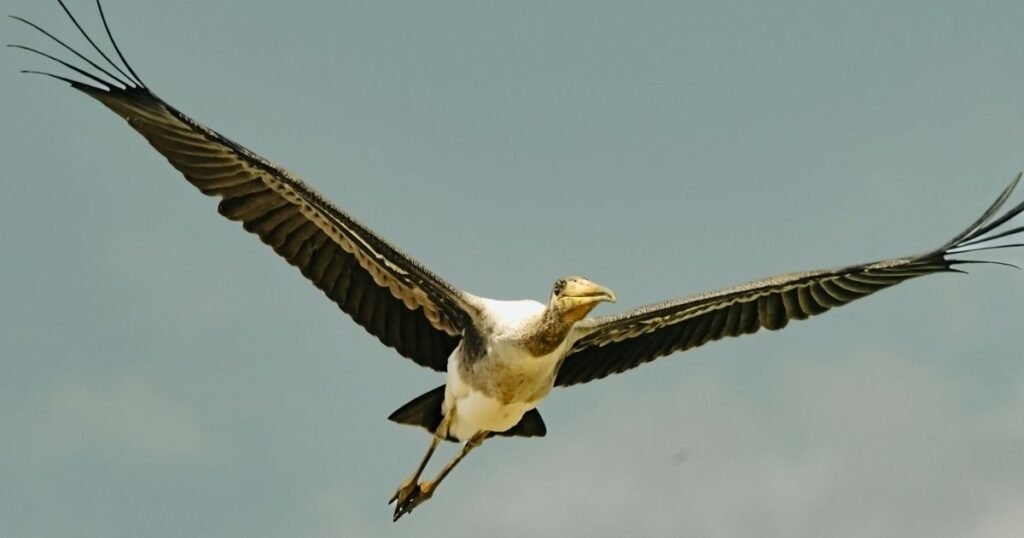
This bird, often regarded as a scavenger, plays a crucial role in its ecosystem, ensuring that nutrients are recycled and organic waste is minimized. The greater adjutant’s ability to stand and forage in muddy riverbanks highlights a balance of grace and practicality.
As they probe their surroundings, these birds can shift their center of gravity, allowing for an agile response to environmental changes.
More Animal Facts and Wildlife Guides
- Cleanest animals in the world include cats, rabbits, and elephants, all known for their meticulous grooming habits. Cats groom for hours daily, rabbits keep tidy burrows with designated waste areas, and elephants bathe in rivers and dust to stay parasite-free. Even pigs, despite their muddy reputation, avoid soiling their sleeping spaces. These species prove that cleanliness in nature often rivals or even surpasses human hygiene standards.
- Animals like foxes include coyotes, jackals, wolves, and raccoon dogs, all sharing similar cunning behavior and adaptability. Coyotes and jackals mirror the fox’s opportunistic hunting style, while wolves showcase the same intelligent, social instincts within the canine family. Raccoon dogs, despite their name, resemble foxes in both appearance and nocturnal habits. Together, these species reflect the resourceful nature common among fox-like canids worldwide.
- Animals that eat mice include owls, cats, snakes, and foxes, each helping control rodent populations. Owls hunt silently at night, cats instinctively chase mice, and snakes like rat snakes swallow them whole. Foxes and hawks also prey on mice, spotting or sniffing them out for quick meals. Together, these predators keep mouse populations naturally balanced.
Conclusion
Birds With Long Legs serve as a testament to the wonders of evolution and the adaptability of life on Earth. Their impressive stature enhances their hunting and foraging techniques and plays a vital role in their mating rituals and social behaviors.
Each species, from the majestic herons to the playful avocets, contributes to the rich tapestry of biodiversity we cherish. By studying and appreciating these remarkable birds, we can gain insights into the environmental challenges they face. Join us in advocating for conservation efforts that protect these magnificent creatures and their habitats.
FAQs
What types of birds are considered “birds with long legs”?
Birds with long legs typically include species like herons, storks, cranes, and certain shorebirds such as flamingos and avocets.
Why Do Some Birds Have Long Legs?
Long legs help these birds wade through water, catch prey, and provide balance while walking on uneven surfaces.
Are Long-Legged Birds Found all over the world?
Yes, many long-legged birds inhabit a variety of ecosystems, from wetlands and marshes to coastal regions, found on every continent except Antarctica.
What do Long-Legged Birds Eat?
Their diet often includes fish, amphibians, insects, and invertebrates, which they catch in shallow water or on land.
How do long-legged birds adapt to their environment?
They have specialized behaviors and physical adaptations, such as long toes for stability and the ability to stand still for long periods while hunting.
Are Long-Legged Birds Migratory?
Many species are migratory, traveling thousands of miles between breeding and wintering grounds to find food and suitable habitats.
How Can I Attract Long-Legged Birds to My Backyard?
Create a wetland area with shallow water, provide native plants for shelter, and avoid using pesticides to create a welcoming environment.
Are Long-Legged Birds Endangered?
Some species are threatened or endangered due to habitat loss, pollution, and climate change, making conservation efforts crucial for their survival.