

Cancer Screening for Dogs: 10 Essential Facts About When to Start and Why It Matters
Cancer screening for dogs is a vital concern for every pet owner, as our cherished dogs are not just pets but beloved family members. Their health and well-being often occupy our thoughts, especially considering that cancer is one of the leading causes of death in dogs.
This article will delve into the importance of regular screenings, what the process entails, and how you can advocate for your dog’s health to catch any issues before they escalate.
What does “cancer screening” mean?
Tests performed to search for early indicators of cancer in dogs who appear healthy and feel well are referred to as cancer screening. Subtle alterations that are not apparent during a physical examination can occasionally be detected by screening tests.
Fundamentally, screening poses a straightforward query:
“Does everything look normal right now, or is there anything that may need a closer look?”
Cancer screening refers to tests used to look for early signals or changes that may be associated with cancer in dogs who appear healthy and are not showing obvious signs of illness. Sometimes, screening tests can identify subtle changes that may not be detected during a routine physical examination.
At its core, screening asks a simple question:
What Can Cancer Screening Tell You?
Depending on the type of screening and the results, your veterinarian may recommend:
- Continuing with routine preventive care and repeating screening in the future
- Monitoring a finding over time to see whether it changes
- Performing additional tests to investigate an abnormal result
- Using imaging, laboratory testing, or other diagnostic procedures when appropriate
- Discussing whether referral to a veterinary specialist would be helpful
A normal screening result does not guarantee that a dog does not have cancer. Some cancers may not be detected by available screening tests, particularly when they are very small or do not produce detectable changes. Similarly, an abnormal result does not automatically mean that cancer is present.
Why Isn’t There One Test for All Cancers?
There isn’t a single screening test that can reliably detect every type of cancer in every dog. Different cancers can develop in different organs and tissues, and they may produce different biological changes.
That’s why cancer screening may involve different approaches, such as
- Blood and laboratory tests to look for changes in a dog’s overall health
- Imaging tests to examine internal organs and tissues
- Urine or other laboratory testing when appropriate
- Specialized screening tests designed to look for biological signals associated with certain cancers
- Regular physical examinations, which remain an important part of preventive care
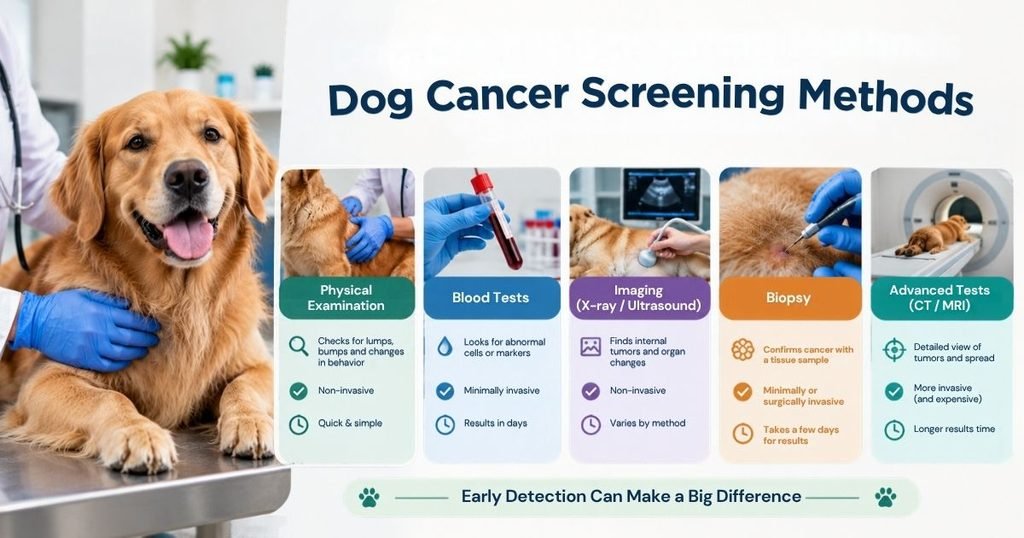
Each approach provides a different piece of information rather than a complete picture by itself.
When Might Screening Be Considered?
The appropriate screening approach can vary based on a dog’s age, breed, overall health, family history, previous medical findings, and individual risk factors. Your veterinarian can help determine whether screening is appropriate and which tests, if any, make sense for your dog.
It is also important not to wait for screening if your dog develops concerning symptoms. Changes such as an unexplained lump, persistent weight loss, reduced appetite, unusual bleeding, ongoing coughing, changes in bathroom habits, or persistent changes in behavior or energy should be discussed with a veterinarian.
Questions to Ask Your Veterinarian
Before choosing a screening test, you may want to ask:
- Why is this screening test appropriate for my dog?
- What type of cancer or health change can this test potentially detect?
- What does a normal result tell us, and what can it not rule out?
- What could cause a false-positive or abnormal result?
- If the result is abnormal, what additional tests might be needed?
- How often should screening be repeated?
- Are there other screening or diagnostic options that may be more appropriate for my dog?
Two approaches that work together
Veterinarians can now consider routine screening using two complementary approaches that work alongside each other. Each one looks at your dog’s health from a different perspective, and together they can provide a broader and more informative picture.
- General wellness screening
- Cancer-focused blood screening
How Do These Approaches Differ?
In the realm of proactive health management, the synergy between general wellness screening and cancer-focused blood screening offers a holistic approach to patient well-being.
General wellness screening: General wellness screening serves as a proactive approach to health, enabling individuals to catch potential issues before they develop into severe concerns.
By using techniques like X-rays or ultrasounds, you can reveal underlying conditions that might go unnoticed during a traditional physical exam. Whether it’s assessing skeletal integrity or observing organ structure, such tools add an invaluable layer of insight.
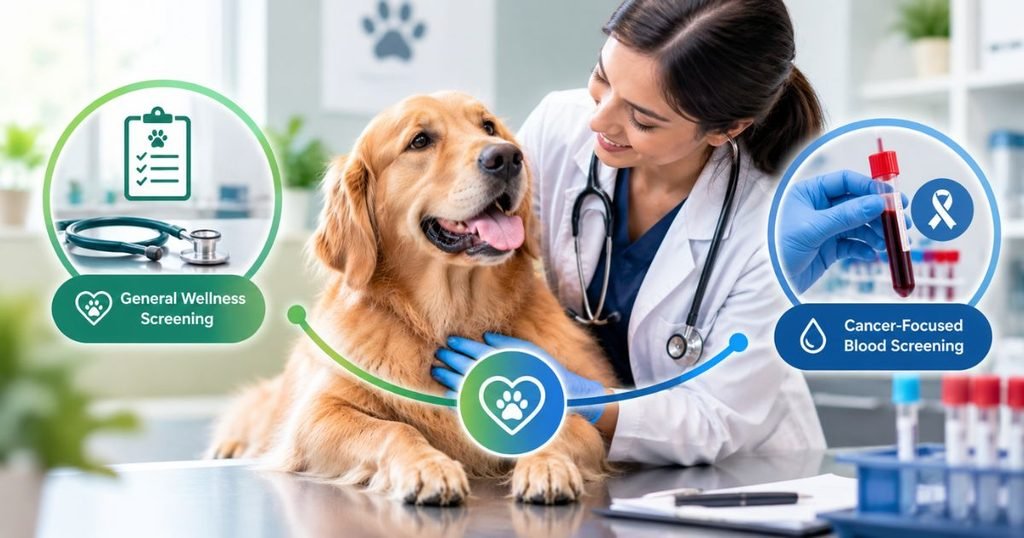
Cancer-focused blood screening: Cancer-focused blood screening is revolutionizing early detection by identifying specific biomarkers associated with various cancers.
Elevated levels of certain proteins or genetic mutations can suggest a predisposition to cancers such as breast, prostate, or even pancreatic. This proactive approach allows healthcare providers to tailor surveillance strategies uniquely suited to each patient.
The important point is that neither approach replaces the other. A dog can have normal general wellness results while still having a change that warrants further investigation, and a cancer-focused screening result may need to be interpreted alongside the dog’s overall health, medical history, examination findings, and other tests.
Why Use Both?
Using these approaches together can help your veterinarian consider different aspects of your dog’s health:
- Overall health: Is there evidence of a broader health problem or change?
- Potential cancer-related signals: Is there a biological finding that may warrant closer evaluation?
- The bigger picture: Do the screening results fit with your dog’s age, history, physical examination, and other health information?
Importantly, screening results are not a diagnosis. An abnormal result does not necessarily mean that your dog has cancer, and a normal result cannot rule out every possible cancer. If a screening result raises a concern, your veterinarian may recommend additional testing to determine what the finding means.
What Should Dog Owners Ask?
If your veterinarian recommends screening, useful questions include:

- What does each screening approach look for?
- Why might my dog benefit from both approaches?
- What can these tests detect, and what can they miss?
- How should the results be interpreted alongside my dog’s physical examination and medical history?
- What would happen if one of the screening results were abnormal?
- Would additional testing be recommended, and why?
- How often should screening be repeated for my dog?
A closer look at blood-based screening
Blood-based screening for lymphoma in dogs offers a revolutionary approach to early detection, leveraging the intricate role of lymphocytes in the immune system.
Lymphoma is a common cancer in dogs: As lymphoma is a common cancer in dogs, understanding these blood markers can aid veterinarians in identifying pre-symptomatic changes.
Lymphocytes: Lymphocytes can exhibit abnormal growth or proliferation, serving as a key indicator long before physical symptoms manifest.
No obvious symptoms: The subtlety of lymphoma’s progression, often with no obvious symptoms, can make it a silent threat.
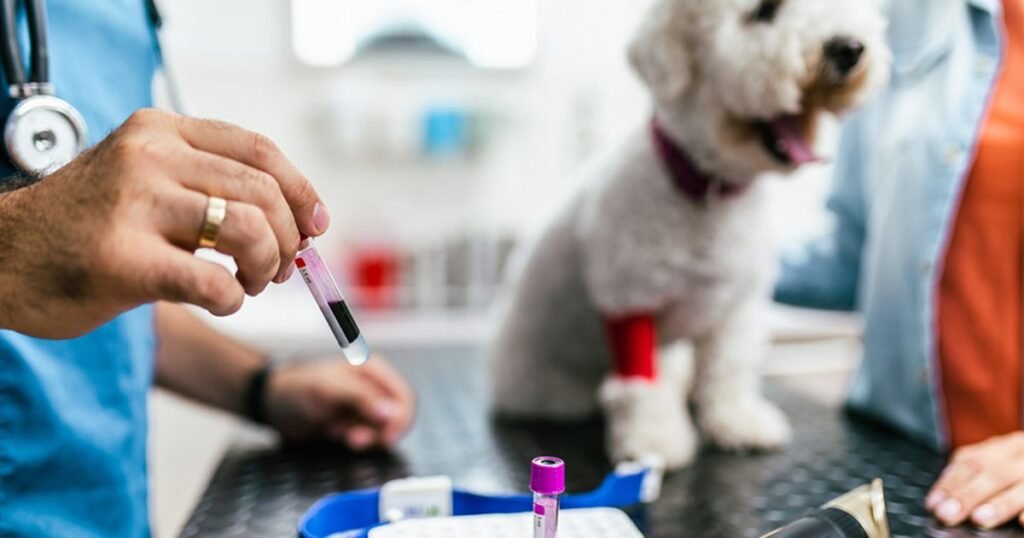
Older or high-risk dogs: Blood-based screening for lymphoma in older or high-risk dogs offers an innovative approach to early detection, yet it’s crucial to recognize its limitations.
A blood test alone cannot confirm lymphoma: it merely raises suspicion, prompting further diagnostic procedures like biopsies or imaging studies. This layered approach allows for a more comprehensive understanding of the disease, which can significantly affect treatment options and outcomes.
Symptoms like swelling of lymph nodes or unexplained weight loss might correlate with increased lymphoma risk, guiding veterinarians in determining which dogs should undergo additional testing.
Confirmed diagnosis: Ultimately, while blood tests are a valuable tool, they underscore the need for a thorough and multi-faceted diagnostic process in the quest for a confirmed diagnosis.
What screening can tell you and what it can’t
Although cancer screening offers valuable information, it’s critical to comprehend its function.
What screening can do
Screening plays a pivotal role in proactive health management by enabling individuals to detect potential concerns early. This early detection can lead to more effective interventions, often preventing more serious conditions down the line.
Whether it’s a routine blood test or a specialized examination, the knowledge gained through screening can empower you to take charge of your health journey. Screening not only illuminates areas of concern but also shapes your understanding of available options.
What Screening Cannot Do
Screening plays a crucial role in early detection, yet it cannot confirm cancer on its own. While tests such as mammograms or colonoscopies may flag potential issues, they often produce false positives or negatives.
This uncertainty can lead to unnecessary stress and further invasive procedures. Therefore, it’s essential to understand that screening is just one piece of a larger puzzle in cancer diagnosis.
Screening has its limitations in preventing cancer and doesn’t guarantee a cure. It can identify risks or abnormalities early, but lifestyle factors and genetic predispositions still play significant roles in whether someone will develop the disease. A “normal” screening result cannot predict future health outcomes, as cancers can develop stealthily over time.
What might happen next if something is found?
If a screening result suggests a concern, your veterinarian will explain what it may mean and recommend the next steps. Depending on the findings, this may include:
- Additional lab tests: Blood or urine tests may provide more information about changes in your dog’s health.
- Imaging: X-rays, ultrasound, or advanced imaging may help examine an area of concern more closely.
- Sampling a lump or tissue: A needle sample or biopsy may help identify what an abnormal area is.
- Monitoring or repeat testing: Some findings may simply need to be watched or checked again over time.
- Specialist referral: Your veterinarian may recommend an oncologist or another specialist for further evaluation or treatment.
Not every dog needs every test. Your veterinarian will usually take a step-by-step approach, starting with the most appropriate option and recommending additional testing only when needed.
Why do veterinarians recommend cancer screening?
Some cancers in dogs may show early warning signs, while others develop silently without obvious symptoms. This is why dog cancer screening can be an important part of preventive veterinary care. Screening may help:

- Detect potential health concerns earlier, when your dog still appears healthy and active
- Create a more complete picture of your dog’s overall health through early monitoring and baseline data
- Support timely decision-making if any abnormal results are found during routine checks
- Expand evaluation and care options, since early detection may allow for a wider range of veterinary oncology approaches
Importantly, a recommendation for screening does not mean your veterinarian suspects cancer. In most cases, it reflects a proactive, preventive approach to supporting your dog’s long-term health and well-being.
When should I consider cancer screening for my dog?
Cancer screening for dogs is often discussed during routine veterinary wellness exams, especially as dogs age or if they have known risk factors for cancer. Early conversations with your veterinarian can support early detection of cancer in dogs and help guide preventive care.
You may want to ask your veterinarian about dog cancer screening if your dog:
- Is 7 years or older
- Is 4 years or older and belongs to a higher-risk breed
- Has a medical history or symptoms that may require closer monitoring
It’s normal to have questions about veterinary cancer screening. Screening is a diagnostic tool that provides more information about your dog’s health it does not mean a diagnosis or commit you to any specific treatment plan.
The bottom line
Many of us operate under the assumption that if we feel okay, our health or productivity is in good standing. Proactive vigilance is key. By focusing on preventive measures, we can detect concerns before obvious symptoms appear, allowing us to address issues before they escalate into something significant.
This perspective isn’t just about avoiding health crises; it extends to our mental and emotional well-being too. Having regular check-ins with ourselves and even seeking external feedback can provide vital reassurance.
By taking these elements into account, pet owners can create a comprehensive care plan that adapts with their furry friends, ensuring they live healthier, happier lives. It’s about fostering a deep, informed bond that transcends mere ownership; it’s about partnership in health and well-being.
Gain Recognition Across Different Species
If you enjoyed learning about this topic, there’s plenty more to discover across the animal kingdom. For instance, you might be surprised to learn are kangaroos smart animals or curious about the unique adaptations seen in animals with webbed feet and animals with long legs.
If you’re into lesser-known species, check out our guides on animals that look like muskrats and animals like ferrets for some interesting comparisons.
And for those fascinated by animal strength and survival traits, don’t miss our deep dive into how strong baboons are and the surprising world of thickest-skin animals.
While learning about Cancer Screening for Dogs, it’s also important to understand other common health concerns that can affect your pet’s comfort and well-being. Explore our guide on itchy skin in dogs to learn about common causes, symptoms, and ways to help your dog maintain healthier skin.
Final Thoughts
Regular cancer screening for dogs is a vital part of proactive pet care that can significantly enhance their quality of life. Early detection increases the chances of successful treatment and can lead to better outcomes for our beloved companions.
By staying informed and making regular veterinary appointments, pet owners can help safeguard their dogs against the dangers of cancer. Remember, your dog can’t tell you when something is wrong, so it’s crucial to communicate with your veterinarian about any concerns you may have. Let’s prioritize our furry friends’ health and schedule a cancer screening for them today!
FAQs
What is Cancer Screening for Dogs?
Cancer screening for dogs involves diagnostic tests designed to detect early signs of cancer, helping with early intervention and treatment.
Why is Cancer Screening Important for my Dog?
Early detection can significantly increase treatment success rates and improve your dog’s quality of life.
At what Age should I Start Screening my Dog for Cancer?
It is recommended to start cancer screening around 7 years of age, although earlier screening may be suggested for breeds prone to certain cancers.
What Types of Tests are used in Cancer Screening?
Common tests include blood tests, ultrasound, X-rays, and biopsies, depending on your dog’s health and risk factors.
What Should I do if my Dog’s Cancer Screening Results are Positive?
Consult your veterinarian immediately. They will discuss treatment options tailored to your dog’s specific needs and condition.
Is Cancer Screening Safe for my Dog?
Yes, most cancer screening procedures are safe and non-invasive, though some tests may require sedation or anesthesia.