
Interesting Facts 101: Are Kangaroos Smart Animals?
While many view kangaroos as simply cute and bouncy, their intelligence may just surprise you!Are kangaroos smart animals.Let’s dive into the captivating cognitive abilities of kangaroos, examining their social structures and problem-solving skills.
By the end, you’ll have a deeper understanding of kangaroo intelligence and its implications for how we perceive and interact with wildlife.
Are Kangaroos Smart Animals?
- Scientific Name: Osphranter rufus (also classified as Macropus rufus)
- Family: Macropodidae
- Class: Mammalia
- Diet: Herbivore, feeds on grasses and shrubs
Kangaroo animal intelligence often surprises those who view them solely as iconic jumpers of the Outback. Recent studies have unveiled their impressive problem-solving abilities, indicating that these marsupials can navigate obstacles and make decisions based on their environment.

Researchers observed kangaroos learning from each other, showcasing a level of social intelligence that speaks to their capacity for empathy and cooperation. This suggests that they possess a sophisticated understanding of their social structures, which enhances their survival in the wild.
Beyond mere problem-solving, the complex communication among kangaroos is a captivating area of study. Their vocalizations, body language, and gestures enable them to convey emotions and intentions, facilitating intricate interactions within their groups.
What Makes Kangaroos Smart Animals?
Kangaroo cognitive abilities extend far beyond their iconic hopping. These remarkable marsupials exhibit impressive problem-solving skills, especially when faced with challenges in their environment.
Kangaroos demonstrate a unique form of social intelligence. Living in groups, or mobs, they display complex social interactions that suggest a deep understanding of their companions.
Observations indicate that they can communicate nuanced signals, helping them to coordinate movements during foraging or when evading predators.
Their ability to forge social bonds is a testament to their memory, enabling them to recognize individuals and respond to changes in group dynamics effectively.
Through these insights, it becomes clear that kangaroos are not just charismatic creatures; they embody remarkable mental capacities that enhance their survival and social cohesion.
Problem-Solving Abilities in Kangaroos
Kangaroos possess remarkable problem-solving abilities that extend beyond their iconic hopping. These marsupials demonstrate impressive adaptability when faced with obstacles in their environment. For instance, studies have shown that kangaroos can quickly figure out the most efficient route to access food sources, showcasing their cognitive agility.

Their ability to learn from previous experiences allows them to navigate complex spaces, whether in the wild or semi-captive areas.
Kangaroos exhibit social intelligence, particularly in group dynamics. They communicate effectively to share information about food availability and potential threats. This communal knowledge-sharing not only enhances their survival odds but also indicates a level of strategic thinking that many may not associate with non-human animals.
Observing these interactions reveals a nuanced layer of problem-solving rooted in social cooperation, reflecting an evolutionary advantage that has propelled kangaroo populations through varied environments.
Kangaroos Can Actually Communicate With Humans
Kangaroos, often perceived as simple grazers of the Australian outback, exhibit a surprising level of cognitive sophistication that allows them to communicate with humans in remarkable ways. Recent studies have shown that these marsupials can recognize human gestures, such as pointing, and can even respond to visual cues to seek assistance or food.
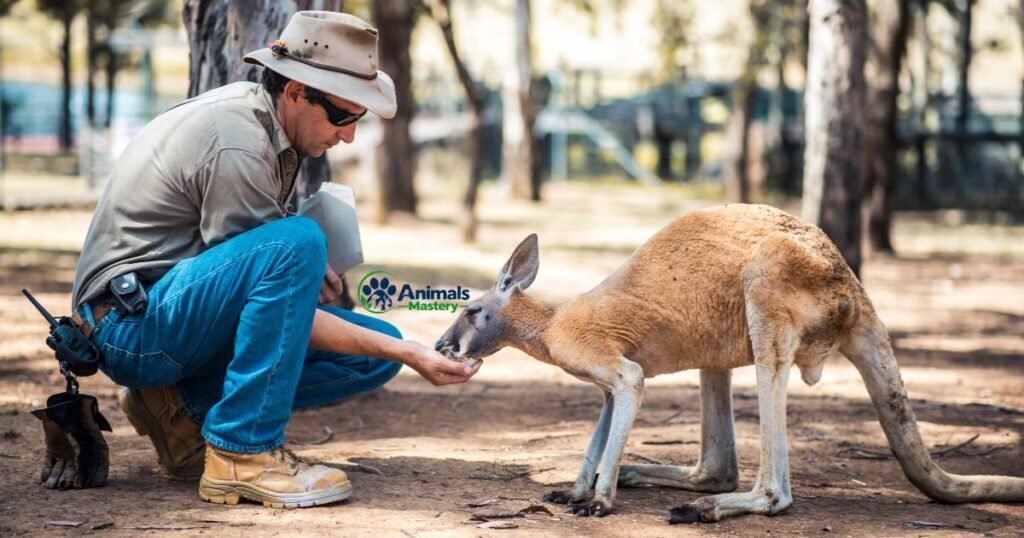
This interaction suggests that their capacity for social learning extends beyond mere instinct, showcasing an evolved understanding of human behavior that sets them apart from many other animals.
The emotional intelligence of kangaroos plays a crucial role in their ability to connect with humans. Their social structure is built around supportive relationships, which enable them to interpret emotional states and respond appropriately. This attunement allows kangaroos to adapt to human environments more effectively, whether they’re in a sanctuary or interacting in the wild.
Outsmarting Predators With Cunning Strategies
Kangaroos have evolved remarkable strategies to evade predators, showcasing nature’s ingenuity in survival tactics. One of their most effective techniques involves deceptive maneuvers, where they skillfully outwit their pursuers with unpredictable zigzag movement.
As they dart away from danger, this erratic path confuses predators, making it difficult for them to anticipate the kangaroo’s next move. This kind of cunning evasion isn’t unique to kangaroos either, it’s a trick shared by other quick-witted survivors, including many animals like foxes, who also rely on sudden, unpredictable movement to throw pursuers off their trail. Such agility not only showcases their physical prowess but also highlights the importance of mental quickness in the wild.
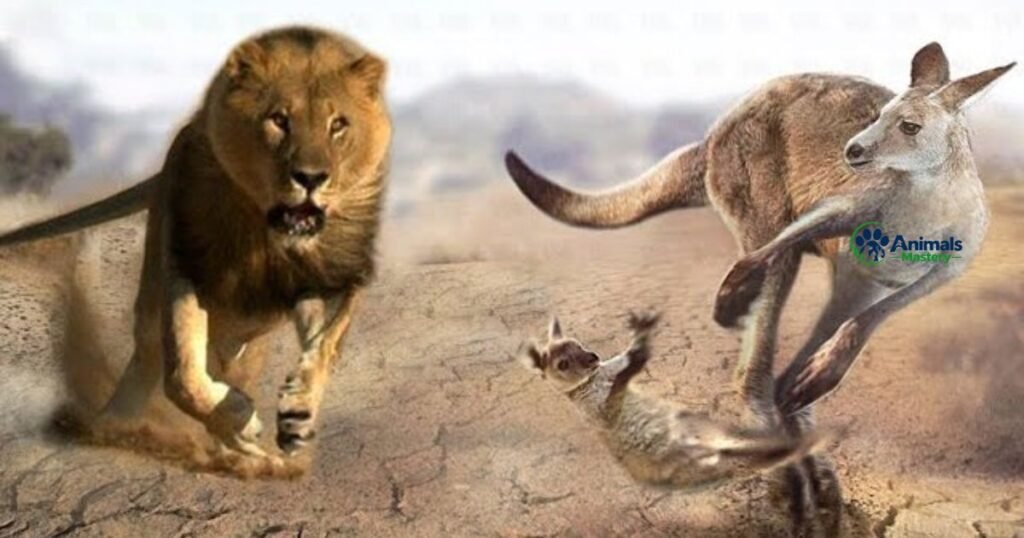
Kangaroos often rely on group defense, leveraging the safety in numbers principle. When threats emerge, they congregate, using collective vigilance to spot dangers earlier and making it harder for a lone predator to hone in on any single target. This coordinated approach reinforces social bonds among the herd, transforming individual instinct into a formidable defense strategy.
In a world where survival often hinges on cunning rather than sheer strength, kangaroos exemplify the art of outsmarting predators through a blend of agility and teamwork.
Kangaroos Social Intelligence
Kangaroos exhibit fascinating social intelligence that challenges traditional views of their behavior. In groups known as “mobs,” these marsupials engage in cooperative behavior that not only enhances their survival but also demonstrates a remarkable level of empathy.
They are often seen grooming one another or supporting a distressed member, a ritual of care that echoes the meticulous grooming habits found among some of the cleanest animals in the world, and which showcases an emotional depth not frequently attributed to animals of their kind.
Group dynamics among kangaroos are intricate; they utilize a sophisticated form of communication, using body language and vocalizations to convey information about food sources and potential threats.
This collective awareness allows them to coordinate their movements and make unified decisions, which is critical in avoiding predators. Their ability to form bonds and exhibit concern for one another raises intriguing questions about the evolutionary advantages of social intelligence in these iconic creatures.
Kangaroos and Their Learning Capacity
Kangaroos, often celebrated for their iconic leaps and unique adaptations, exhibit remarkably sophisticated learning capacities that challenge our understanding of animal intelligence. Studies reveal that kangaroos can learn from observing their peers, mimicking their behaviors to access food or evade threats, which speaks volumes about their social intelligence.
Kangaroo mothers showcase an intriguing aspect of learning, empathy. When a joey falls behind or struggles, mothers adjust their behavior, pacing their hops or altering their route to ensure their offspring can keep up.
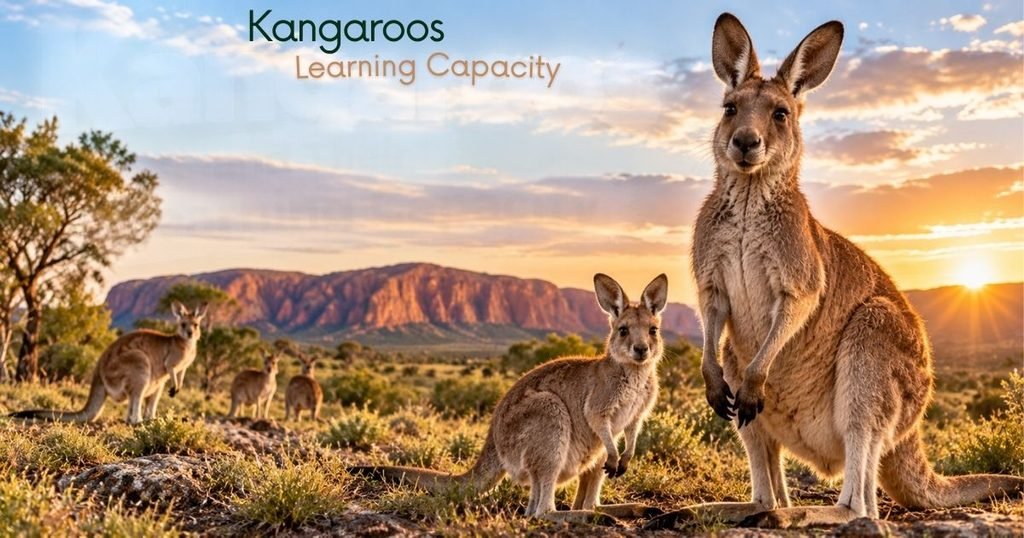
This ability not only nurtures the young but also suggests a deep-seated understanding of their joey’s needs and challenges.
As scientists continue to explore these fascinating behaviors, we gain a greater appreciation for the cognitive world of kangaroos, uncovering insights into how these creatures adapt to their ever-changing Australian landscapes.
Unique Social Behaviors of Kangaroos
Kangaroos exhibit a fascinating array of social behaviors that underscore their adaptability and intelligence. One of the most intriguing aspects is their communal living arrangements, often found in groups called “mobs.” This social structure not only provides safety in numbers but also showcases their complex interactions, from grooming to playful sparring.
Watching a mob interact offers a glimpse into their social hierarchies, where dominant males engage in ritualistic displays to establish status without causing undue harm.
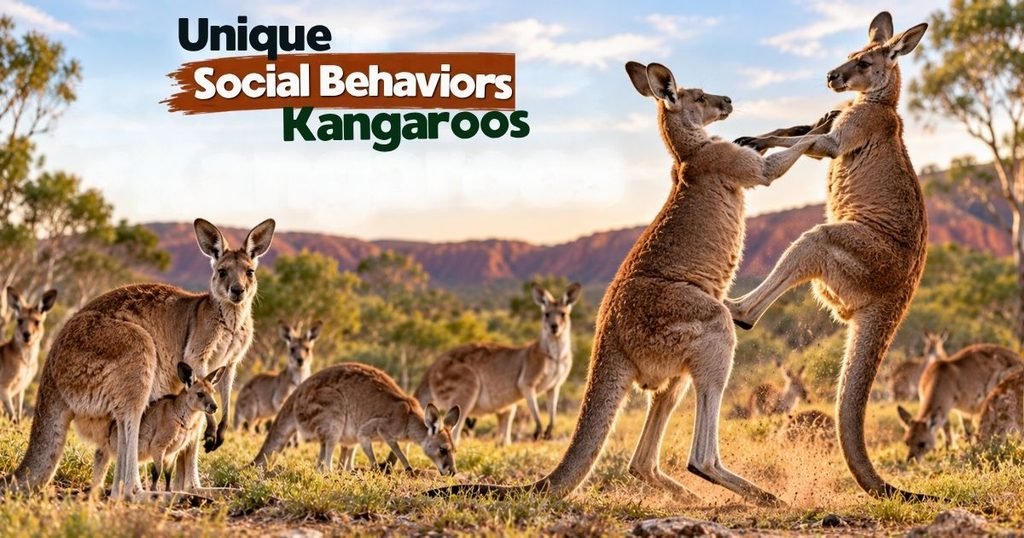
Kangaroos communicate through a rich tapestry of body language and vocalizations, often expressing alarm or reassurance among their peers. Researchers have noted that their thumping hind legs serve as a signaling mechanism, alerting others to potential threats.
More surprisingly, kangaroos are known to form long-standing bonds, especially between mothers and their joeys. These relationships are not just protective; they include playful interactions that promote social learning, enhancing the joeys’ skills for future independence.
Adaptations to Environmental Challenges
Kangaroos exhibit remarkable intelligence through their adaptability to the harsh conditions of the Australian outback. One of their key survival strategies is their unique social structure; these creatures form groups that help them navigate threats and locate resources such as water and food.
This collective behavior isn’t just for safety; it enhances their learning capabilities, as they can observe and mimic each other’s strategies, showcasing a form of social intelligence that many species lack.
Kangaroos possess impressive physical adaptations that complement their smarts. Their powerful hind legs, comparable in raw strength to those found among some of the most muscular animals on the planet, allow for efficient long-distance travel, crucial for traversing vast landscapes in search of scarce resources. Their keen sense of hearing and eyesight further enhances their awareness of predators and environmental changes.
This ability to quickly assess and respond to challenges, whether through hopping to safety or communicating with others in their group, underscores an intelligence that is as much about instinct as it is about learning. The kangaroo not only survives; it thrives, a testament to the intricate balance of wit and physical prowess in the wild.
Interesting Facts About Kangaroos
Kangaroos aren’t just graceful on land; when it comes to water, they put their powerful hind legs to good use. Kangaroos have been observed using their legs to paddle through rivers and lakes, showcasing a surprising versatility that defies their usual reputation as land dwellers. Their thick, muscular tails play a role here too, acting as a rudder much like the tails relied on by other animals with long tails for balance and propulsion.
This unique skill not only aids in escaping predators but also in crossing vast landscapes in search of food and mates.
Living in social structures known as mobs, kangaroos exhibit fascinating social behaviors. Within these groups, they communicate through a series of low-frequency sounds, allowing them to keep in touch even over long distances. This collective awareness fosters cohesion and protection among members, working seamlessly to fend off potential threats.
The kangaroo’s complex social life adds yet another layer to our understanding of these iconic Australian animals, reminding us that there’s much more beneath the surface of their hopping facade.
Are Kangaroos Smarter Than Dogs?
When comparing kangaroo intelligence with dog intelligence, one might be surprised to discover that both species excel in unique ways tailored to their environments. Kangaroos exhibit remarkable problem-solving skills, particularly in navigating their expansive landscapes.
Their ability to analyze and adapt to various challenges, such as finding food or escaping predators, underscores their survival strategies that have evolved over millennia. This adaptability highlights a different kind of intelligence, one that is instinctual and honed for survival rather than companionship.

On the other hand, dogs are renowned for their social intelligence, which stems from thousands of years of domestication alongside humans. Their capability to understand human emotions and cues surpasses that of most animals, allowing for intricate bonds that facilitate training and collaboration.
While kangaroos may shine in solitary survival aspects, dogs excel in environments reliant on social interactions. Both creatures showcase their intelligence in ways that reflect their lifestyles, offering a fascinating glimpse into how different species solve problems and thrive in their respective worlds.
Cognitive Comparisons with Other Animals
Kangaroos may not be the first animals that come to mind when we think of intelligence, yet their unique adaptive behaviors reveal a surprising level of cognitive prowess.
Unlike many of their mammalian counterparts, kangaroos exhibit problem-solving skills that enable them to navigate their environment effectively. For instance, they have been observed using their strong hind limbs to maneuver obstacles in their path, an indication of spatial awareness that rivals that of more traditionally regarded intelligent species like elephants and chimps.

A comparative look at social behaviors sheds light on kangaroos’ cognitive abilities. While they may not flaunt the intricate social structures seen in wolves or dolphins, kangaroos engage in cooperative behaviors and form social hierarchies, suggesting a nuanced understanding of relationships.
Their ability to communicate through body language and vocalizations further underscores a level of social intelligence that invites us to rethink our biases about “smart” animals. Kangaroos may possess a different kind of intelligence, one that is perfectly adapted to their environment, prompting us to broaden our definitions of animal cognition.
Conservation and the Future of Kangaroos
The future of kangaroos hinges on a delicate balance between conservation efforts and the pressures of human activity. As urban expansion continues to encroach on their natural habitats, innovative strategies are emerging to ensure these iconic marsupials thrive.
The integration of wildlife corridors can help mitigate habitat fragmentation, allowing kangaroos not only to roam freely but also to maintain genetic diversity essential for their survival.
Equally crucial is fostering a cultural connection between people and kangaroos. Educational initiatives that highlight the ecological roles of kangaroos, such as their involvement in seed dispersal and ecosystem health, can inspire community-driven conservation efforts.
By engaging local communities in monitoring wildlife populations and advocating for sustainable land practices, we create a collective responsibility that can safeguard kangaroos for future generations. Understanding that the fate of kangaroos is intertwined with our environmental choices provides a powerful impetus for change.
Final Words
In conclusion, kangaroos exhibit a range of intelligent behaviors that challenge our perception of these unique marsupials. Their problem-solving skills, social interactions, and ability to adapt to their environment illustrate a level of intelligence that is often overlooked.
From their communication within groups to their adeptness at navigating complex terrains, it is evident that kangaroos possess a remarkable cognitive capacity.
As we continue to study these fascinating animals, we uncover more about their capabilities and what they can teach us about animal intelligence. Are kangaroos smart animals .Let’s take a moment to appreciate these remarkable creatures and advocate for their conservation in the wild.
FAQs
How smart are kangaroos?
Kangaroos are often perceived as simple creatures due to their unique physical characteristics and habits, but they possess a surprising level of intelligence. Research has shown that they can solve problems in their environment and adapt their behavior based on previous experiences.
Are kangaroos ever friendly?
Kangaroos are often perceived as gentle and friendly creatures, especially in popular culture. In their natural habitats, they may exhibit curiosity towards humans and can be seen engaging in social behaviors with one another.
Can a kangaroo bond with a human?
Yes, kangaroos can bond with humans, particularly if they are raised in a domestic setting from a young age. Like many animals, kangaroos can form attachments based on consistent care, socialization, and positive interactions.
What is the no. 1 smartest animal?
Determining the “no. 1 smartest animal” can be subjective and often depends on how we define intelligence. Many experts point to dolphins, particularly the bottlenose dolphin, as one of the smartest species due to their complex social structures, advanced communication skills, and ability to learn and solve problems.
What is the lowest IQ mammal?
Determining the lowest IQ mammal can be challenging, as intelligence isn’t solely defined by IQ tests, which are primarily designed for humans. However, many argue that animals like the opossum or certain species of rodents may rank among the least intelligent mammals.
Are kangaroos afraid of dogs?
Kangaroos can exhibit a degree of wariness around dogs, primarily because dogs are natural predators for many smaller animals. While kangaroos are generally not aggressive, they may perceive dogs as threats, especially if the dogs are barking or are in an agitated state. This instinctual fear is amplified if the dog behaves in a predatory manner, which can lead to kangaroos fleeing the area.
What is a kangaroo’s weakness?
One of their primary weaknesses is their reliance on open spaces. While they are incredibly agile and can swiftly maneuver in the wild, their habitat often consists of open plains, making them more susceptible to predators like dingoes.
What scares kangaroos away?
Kangaroos can be quite skittish, and several factors can scare them away. One major deterrent is loud noises; sudden sounds like fireworks, dogs barking, or heavy machinery often cause them to flee. The presence of predators or threats, real or perceived, can make them vacate an area quickly. This includes both natural predators like dogs and even human activity that may seem threatening to them.